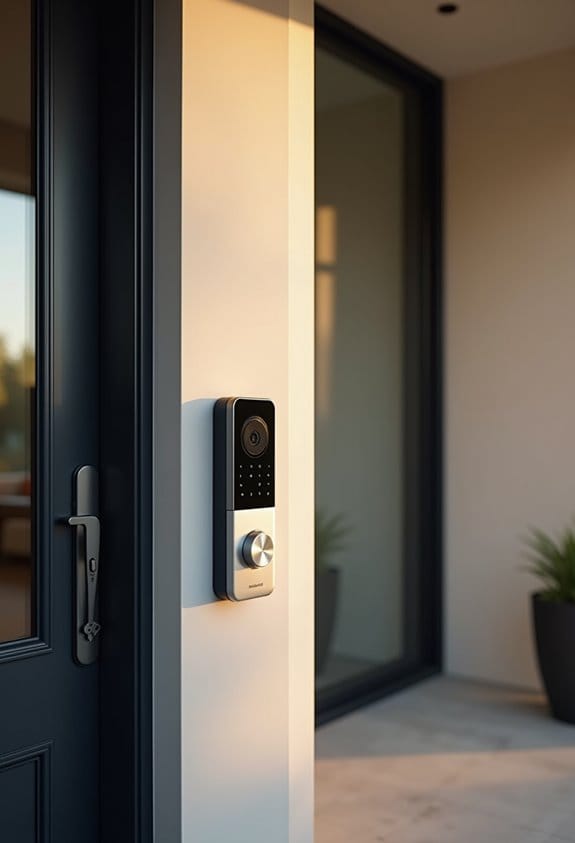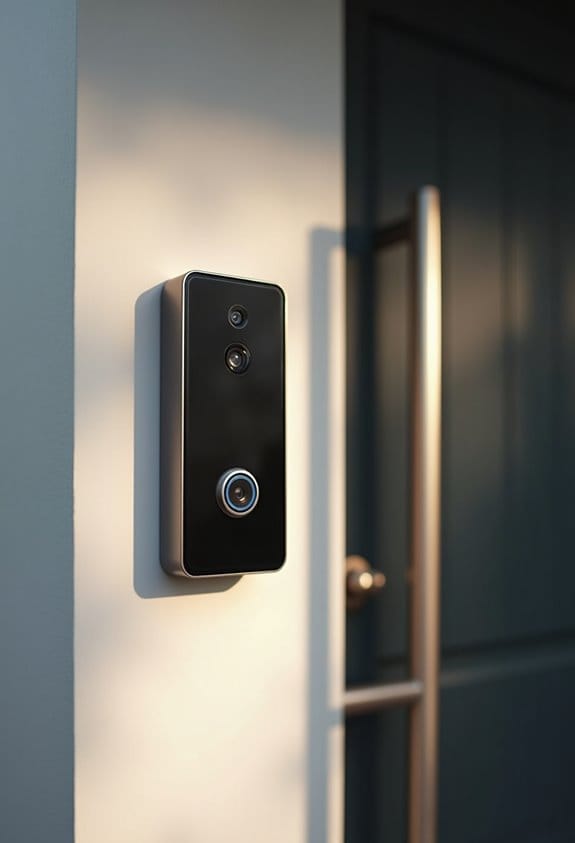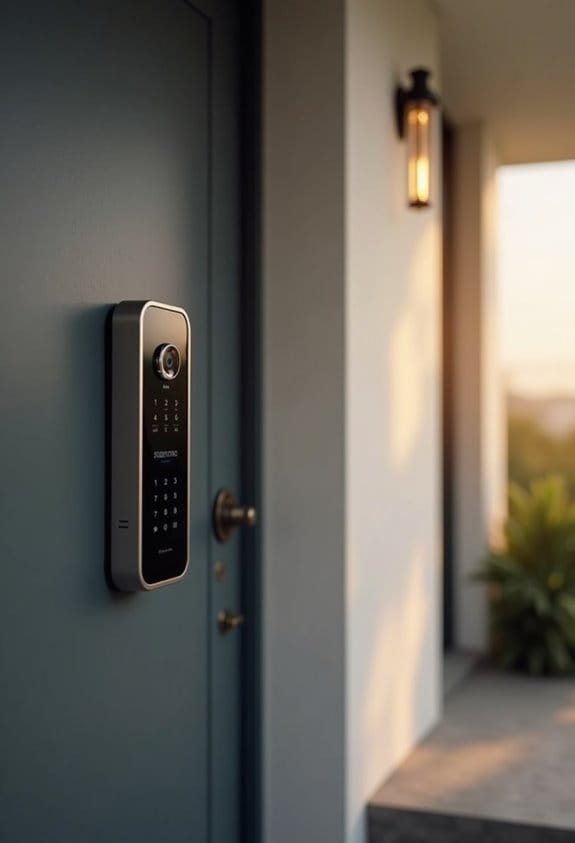

A video doorbell combines a traditional doorbell’s functionality with advanced technology like HD video, motion sensors, and two-way audio. Unlike security cameras, video doorbells focus specifically on monitoring entryways and typically have a narrower field of view. They’re easier to install and can often replace existing doorbell systems. Some models even require a subscription for cloud storage. If you’re considering security options for your home, understanding the differences can guide your choice in protective devices.
Key Takeaways
- A video doorbell combines traditional doorbell functions with HD video recording, offering enhanced security and monitoring capabilities for entryways.
- Unlike traditional doorbells, video doorbells provide real-time notifications, motion detection alerts, and two-way audio communication.
- Video doorbells have a narrower field of view (100-120 degrees) compared to security cameras, which typically cover 180-360 degrees for larger areas.
- Installation of video doorbells is generally simpler and can be done wirelessly, while security cameras may require strategic placement and wiring.
- While both video doorbells and security cameras may incur subscription fees for cloud storage, video doorbells are usually more cost-effective initially.
What Is a Video Doorbell and How Does It Work?

A video doorbell, while it may seem simple, is actually a sophisticated device that merges a doorbell with advanced technology, allowing us to enhance our home security. These video doorbells, functioning as a doorbell camera, let us monitor activity at our front door with motion sensors that detect visitors. When someone approaches, we receive real-time notifications on our smartphones. With HD video recording, typically around 1080p, we can capture clear images. Many models also feature two-way audio, enabling us to communicate with visitors without opening the door. This is particularly useful for package deliveries. While these devices rely on internet connectivity, some may require monthly subscriptions for extra features like cloud storage, adding convenience to our daily lives. Additionally, pairing a video doorbell with a long-range doorbell chime can ensure you never miss a visitor no matter where you are on your property.
Key Features of Video Doorbells You Should Know

When we consider the essential features of video doorbells, it’s clear that these devices are designed with both security and convenience in mind. Key aspects include HD video recording, which allows us to capture clear images at our front door. Night vision is another vital feature, enabling us to see visitors even in low-light conditions. Motion detection alerts immediately inform us of any activity, enhancing our home security. Many video doorbells also offer two-way audio, so we can communicate directly with guests without opening the door. Additionally, options like cloud storage let us access recorded footage and maintain a video history. Integrating smoothly with smart home devices, these doorbells provide extensive monitoring and peace of mind. Choosing a device with a wide field of view ensures thorough coverage of the entryway, helping reduce blind spots.
How Video Doorbells Compare to Traditional Doorbells

Although some people may prefer the simplicity of traditional doorbells, understanding the differences between video doorbells and their conventional counterparts can highlight the advantages of modern technology. Video doorbells serve as interactive security devices, equipped with a camera, motion sensors, and two-way audio to enhance our home security systems. Unlike traditional doorbells, which only sound an alert, video doorbells provide live video feeds and notifications when someone approaches. Features like HD video recording and night vision offer added value that traditional doorbells lack. Additionally, installation is generally simple and can often be completed by homeowners themselves. By allowing us to communicate with visitors remotely, video doorbells upgrade our home entry experience remarkably beyond what traditional doorbells can provide. Many video doorbells also include AI-powered motion detection, which reduces false alerts and improves security effectiveness.
How Video Doorbells Boost Your Home Security
Video doorbells greatly enhance our home security by offering real-time monitoring capabilities that traditional doorbells simply don’t provide. With advanced features like motion detection alerts, we receive immediate notifications when someone approaches our property, potentially deterring intruders. Video doorbells offer high-definition video, typically 1080p resolution, ensuring we can clearly identify visitors or suspicious activity. Plus, the two-way audio feature allows for effective communication with people at our door without opening it, enhancing safety. Many video doorbells integrate cloud storage options, enabling us to save recorded footage for later retrieval, which serves as valuable evidence if theft or disputes arise. Overall, these tools give us peace of mind about our property surveillance. Additionally, the inclusion of color night vision technology ensures clear visibility even in low-light conditions, making nighttime monitoring more reliable.
Video Quality and Coverage of Video Doorbells and Security Cameras
While both video doorbells and security cameras serve important roles in home surveillance, they differ greatly in video quality and coverage. Video doorbells typically have a field of view between 100-120 degrees, focusing on the area around your front door. In contrast, security cameras can cover 180-360 degrees to monitor larger areas. Most video doorbells offer 1080p HD resolution, while some advanced models reach 2K 4MP. Security cameras can provide 4MP to 12MP for superior video quality. Additionally, security cameras generally excel in night vision, enhancing visibility in low light, which is essential for detailed captures. When it comes to storing footage, security systems often retain recordings for weeks, ensuring thorough surveillance of your property. Many video doorbells also offer infrared night vision capabilities to ensure clear images in darkness.
Key Benefits of Video Doorbells Compared to Security Cameras
When it comes to enhancing home security, the benefits of video doorbells stand out, especially compared to traditional security cameras. Video doorbells allow us to communicate directly with visitors at our front door via two-way audio, a feature most security cameras lack. They provide targeted alerts focused on entry points, making them useful for monitoring deliveries and visitors. Video doorbells usually start around $50, offering an affordable option for budget-conscious homeowners. Their installation is simple, often replacing existing doorbells with minimal tools, unlike security cameras that may need complex wiring. Additionally, features like package detection alerts greatly enhance usability for those expecting deliveries, ensuring we stay informed about our property. Most importantly, many video doorbells offer high-definition video with a wide field of view to ensure clear and comprehensive coverage of your entryway.
When to Choose a Security Camera Instead of a Video Doorbell?
If we’re considering home security options, it’s important to understand the specific needs of our property. We should choose a security camera over a video doorbell if we need broader coverage. Security cameras can cover areas ranging from 90° to 360°, while video doorbells are limited to our front door. For homes with multiple access points, cameras offer strategic placement to eliminate blind spots, monitoring yards and driveways. If high video quality is a priority, security cameras typically range from 4MP to 12MP, surpassing the common 1080p of video doorbells. Additionally, cameras provide advanced features like AI anomaly detection and night vision, enhancing our security experience with continuous recording capabilities. Unlike many video doorbells that offer 1080P resolution and two-way audio, security cameras can also have longer battery lives and flexible cloud storage options for secure video access.
Comparing Installation: Video Doorbells vs. Security Cameras
Installing a video doorbell can often be a more manageable task than setting up a security camera system. Video doorbells are designed to replace existing doorbell systems with minimal tools and just a few screws. Many models offer wireless options, eliminating the need for complicated wiring. This allows DIY enthusiasts to typically handle the installation without professional help. Conversely, security cameras usually require strategic placement for broader surveillance, often necessitating a power source that might involve wiring. While we can install video doorbells at eye level near our front doors, security cameras can be mounted in various locations, which may lead to a more complex installation process that sometimes requires professional installation for peak performance. Additionally, many video doorbells feature tool-free setups, allowing for quick and easy mounting with minimal effort.
Comparing Costs: Video Doorbells vs. Security Cameras
Although both video doorbells and security cameras serve the purpose of enhancing home security, their costs can differ greatly. Basic video doorbells start around $50, whereas advanced models can reach up to $200. In comparison, security cameras begin at $50 but can exceed $500 for high-end systems with advanced features. While video doorbells tend to have a lower initial investment, security cameras offer broader coverage, making them a better option for thorough home security. Additionally, some video doorbells may require subscription fees for cloud storage and premium features, while basic functionality typically remains free. It’s important to assess total costs, especially with multi-camera systems, as these can greatly increase for larger properties needing several devices. Choosing a video doorbell that works with existing wiring can help avoid additional installation costs and improve device reliability.
Frequently Asked Questions
What Is Better, a Doorbell Camera or a Camera?
When it comes to choosing, we think a doorbell camera’s benefits like user installation ease and cost comparison often outweighs a security camera’s advantages, especially considering privacy concerns and customer reviews about image quality and storage options.
Do You Have to Pay Monthly for a Video Doorbell?
No, we don’t have to pay monthly for a video doorbell. Some models let us save videos locally, avoiding those subscription plans. Still, device features and warranties can enhance our user experience markedly.
What Is the Downside of Video Doorbells?
Video doorbells can pose downsides like privacy concerns, installation challenges, subscription fees, limited range, and false alerts. Additionally, compatibility issues, durability factors, battery life, and footage storage might impact our overall user experience.
Do Video Doorbells Require Wi-Fi?
Yes, video doorbells need Wi-Fi connectivity for best performance. During installation, we must consider distance range and battery life, while balancing smart home integration, video quality, privacy concerns, and cost considerations for outdoor use.