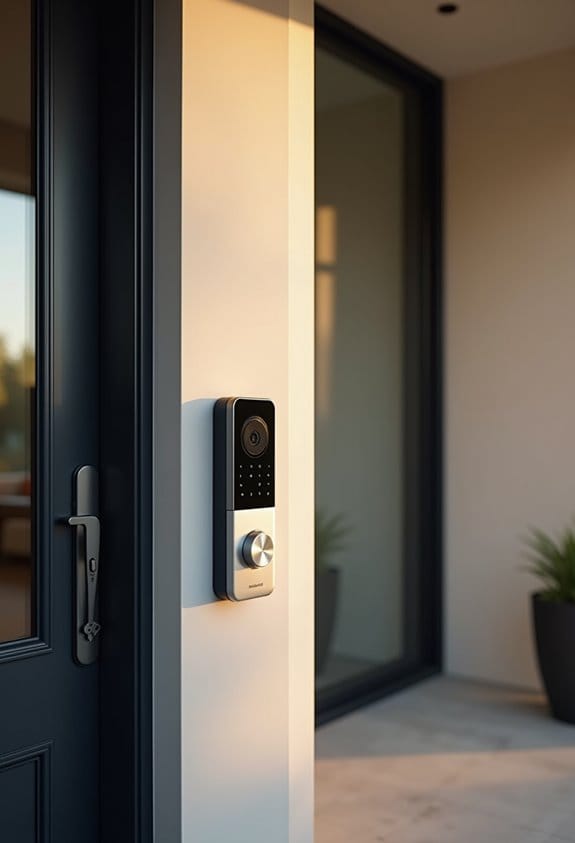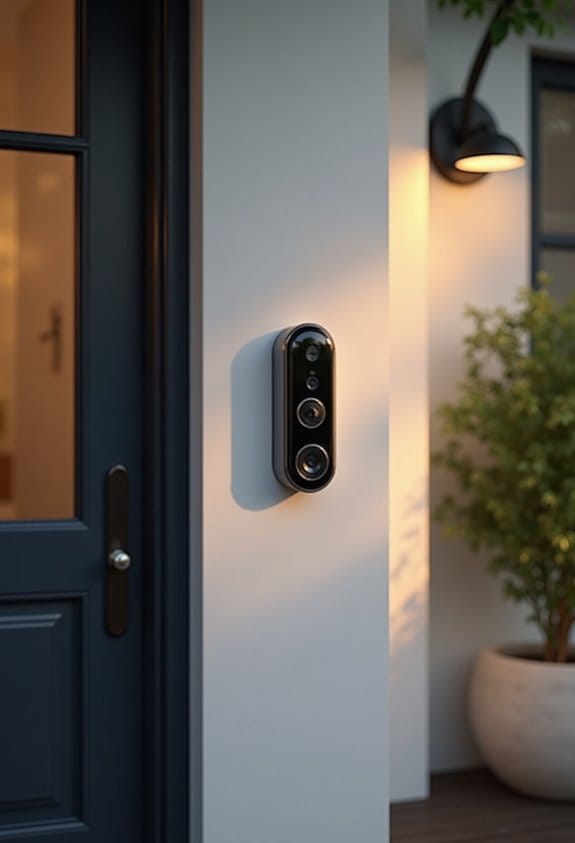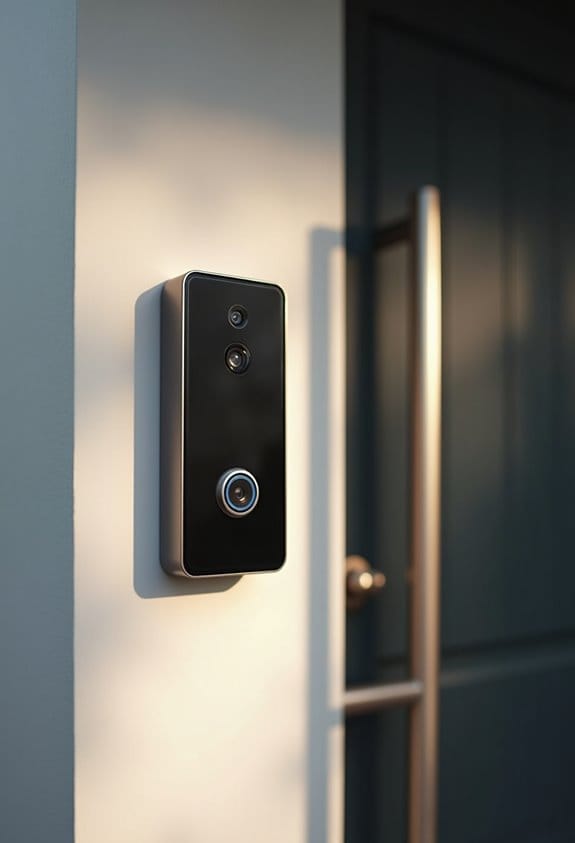

Video doorbells combine cameras, motion sensors, Wi-Fi technology, and two-way audio to enhance home security. They typically offer HD video at 1080p resolution and deploy infrared night vision, allowing clear visuals around the clock. Motion sensors utilize passive infrared technology to detect movement, adjustable for sensitivity. A stable Wi-Fi connection is essential for live streaming and real-time alerts. Additionally, two-way audio lets us communicate directly with visitors, enhancing security. Let’s explore the inner workings of these devices further.
Key Takeaways
- Video doorbells combine HD cameras, microphones, and motion sensors to monitor and communicate with visitors in real-time.
- Motion sensors use passive infrared technology to detect heat, providing alerts for movement in the camera’s field of view.
- Equipped with night vision capabilities, video doorbells capture clear visuals even in low-light conditions.
- Reliable Wi-Fi connectivity is essential for streaming live video, real-time notifications, and accessing cloud-stored footage.
- Two-way audio allows for direct communication with visitors, enhancing security and deterring potential intruders.
What Is a Video Doorbell and How Does It Work?

A video doorbell is an advanced security device that merges several essential components, such as a camera, microphone, speaker, and motion sensors, to improve home safety. It operates through a Wi-Fi connection, allowing us to receive real-time notifications on our smartphones when someone approaches our door. The built-in camera provides HD video recording, enabling clear visuals at any time. With two-way audio, we can communicate directly with visitors, enhancing convenience and security. Night vision capabilities guarantee monitoring even in low-light conditions. Many models also offer cloud storage for recorded footage, giving us peace of mind. Whether we install it wired or wireless, the video doorbell effectively integrates into our home security system, fortifying our defense against intruders. Choosing a device with motion detection features can further improve alert accuracy by focusing notifications on key areas.
Understanding Motion Sensors in Video Doorbells

Motion sensors play a pivotal role in the functionality of video doorbells, enhancing our ability to monitor activity outside our homes. Most video doorbells use passive infrared (PIR) technology, detecting heat from moving objects, like people approaching our doors. The effectiveness of these motion sensors depends on their field of view and range, which dictate how much area we can monitor for movement. We can adjust sensitivity settings to avoid false alarms triggered by pets or passing vehicles. Proper placement of the doorbell camera is essential; mounting it too high can lead to missed detections. Advanced models offer customizable motion detection zones, allowing us to receive notifications only for relevant movements. Additionally, many doorbells incorporate advanced AI technology to reduce false alarms by accurately distinguishing between humans and animals.
The Camera: Key Features and Capabilities of Video Doorbells

Understanding the camera features of video doorbells is essential for maximizing their benefits. Most video doorbells come equipped with high-definition cameras that offer at least 1080p resolution, ensuring clear video capture of visitors day or night, thanks to infrared night vision. With a wide field of view, often around 180°, these cameras can monitor more area around your front door. When motion is detected, the camera automatically records video clips for a set duration, typically stored in the cloud for easy retrieval. Advanced models utilize AI to minimize false alerts by distinguishing between humans and pets. Additionally, the two-way talk feature lets us communicate directly with visitors through built-in microphones and speakers, enhancing our home security. Choosing a camera with a wide field of view helps reduce blind spots and improve overall monitoring coverage.
How Wi-Fi Connectivity Boosts Video Doorbell Performance
While we may appreciate the various features of our video doorbells, the performance heavily relies on Wi-Fi connectivity. A solid internet connection enables video doorbells to stream live video feeds, allowing for real-time monitoring of visitors from anywhere. Most models use a 2.4 GHz band, but newer ones support 5 GHz, offering better speeds and less lag. When motion is detected, instant notifications are sent to our smartphones, guaranteeing we never miss important moments. Cloud storage is essential for accessing recorded footage, making it vital that our Wi-Fi connection remains stable. Connectivity issues can lead to notification delays and disrupted live feeds. For peak performance, we must verify a reliable internet connection throughout our homes. Additionally, features like motion detection enhance security by promptly alerting homeowners to any activity near the doorbell.
Stay Informed With Real-Time Alerts From Video Doorbells
Being aware of who approaches our front door is a key feature of video doorbells. These devices use motion sensors to detect activity, sending real-time alerts to our smartphones. When someone approaches, we receive notifications powered by heat detection technology, which helps minimize false alarms. By connecting to home Wi-Fi, video doorbells allow for live streaming and control through dedicated apps, enhancing home security. Many models feature customizable motion detection zones, enabling us to refine which areas are monitored, reducing unnecessary alerts from passing cars or pets. With advanced AI capabilities, some video doorbells can distinguish between people and other moving objects, ensuring that the notifications we receive are relevant and timely for when we need to respond. Additionally, AI-powered alerts improve notification accuracy by filtering out non-human activities to reduce false alarms.
Two-Way Audio Features in Video Doorbells and Their Impact on Security
Two-way audio features in video doorbells greatly enhance home security, allowing us to directly communicate with visitors at our front door without the need to open it. This capability is invaluable for managing package deliveries, ensuring secure drop-offs and reducing the risk of theft. Equipped with noise-canceling microphones, many video doorbells filter out background noise, ensuring clearer communication during interactions. The presence of two-way audio can effectively deter intruders, who may realize they are being monitored and warned before attempting to enter. By integrating two-way audio with video feeds, we create a thorough security solution, enabling real-time interaction and immediate alerts, making our homes safer. Ultimately, it enhances our ability to safeguard our property. This feature is often complemented by real-time motion alerts to provide immediate notification of activity at the door.
Common Questions About Video Doorbells?
As we explore our options for securing our homes, many of us have questions about the functionality and features of video doorbells. These devices typically include a camera that captures high-definition video for real-time monitoring. They also use motion sensors, which detect movement near your door and trigger recording, sending instant notifications to your connected devices. Most video doorbells connect to your Wi-Fi network, allowing live streaming and remote access through a mobile app. Many models feature two-way audio, enabling conversation with visitors without opening the door for enhanced home security. It’s crucial to recognize that notifications can often be customized to distinguish between people and pets, minimizing false alerts. This guarantees a more reliable and secure experience for everyone. For optimal home security integration, pairing your video doorbell with a compatible mechanical chime can provide distinct audible alerts for different entry points.
Frequently Asked Questions
What’s the Difference Between Motion Detection and Motion Alerts on a Ring Doorbell?
In our garden of security, motion sensors bloom vibrantly, while motion alerts echo like whispers. Configuring settings lets us choose which notifications to heed, balancing privacy and vigilance, ensuring our doors remain both welcoming and safe.
What Is the Downside of Video Doorbells?
Video doorbells come with downsides, like privacy concerns and high costs for data storage. We also face limited battery life, installation challenges, and notifications overload from false alerts, impacting our overall user experience and video quality.
Do You Have to Pay Monthly for a Video Doorbell?
We don’t have to pay monthly for a video doorbell, as free services exist. However, considering budget, subscription options, cloud storage, and device features can enhance our user experiences and security benefits considerably.
Do Doorbell Cameras Record All the Time?
No, doorbell cameras don’t record all the time. They capture live streaming when motion’s detected, balancing battery life and user privacy. We can compare brands for camera quality, storage options, and custom alert settings for neighborhood watch.