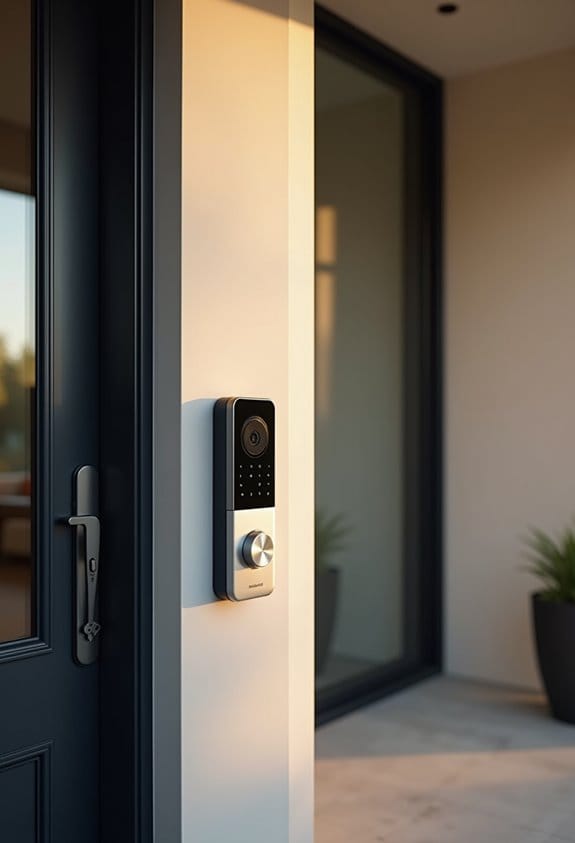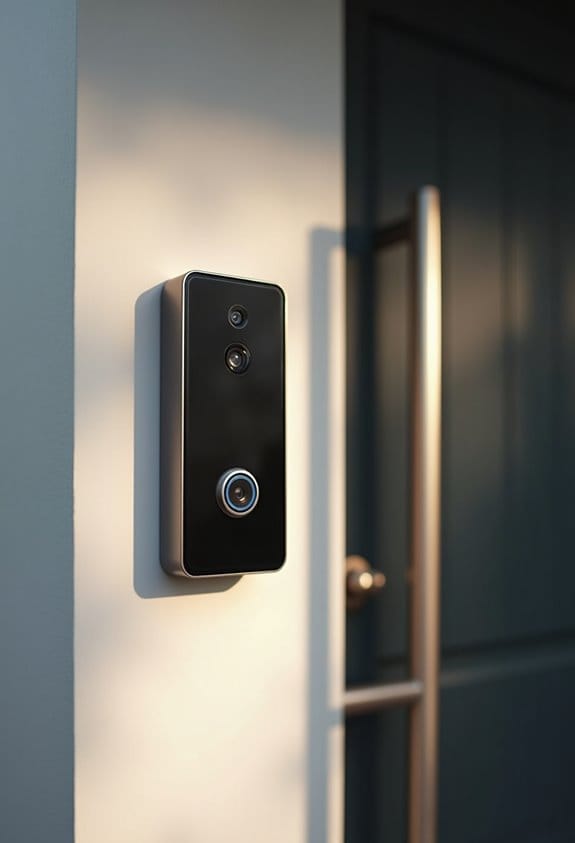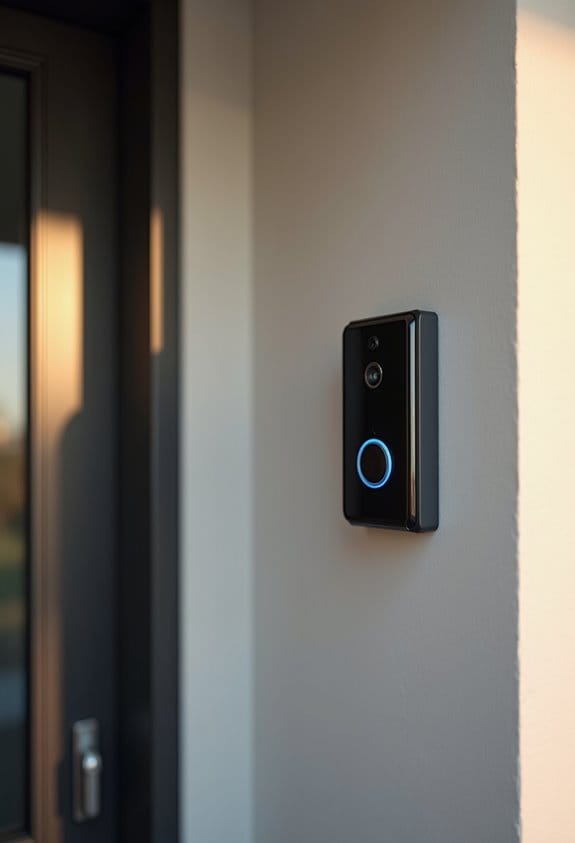

As new video doorbell owners, we must prioritize our privacy. First, use clear signage to inform guests about recordings. Next, position the camera to capture only our property, using camera wedges if necessary. We should regularly review settings, limit footage retention to no more than 48 hours, and securely delete old recordings. Employ strong, unique passwords and enable two-factor authentication for security. Staying informed about local privacy laws will help us remain compliant. More insights are just ahead.
Key Takeaways
- Position the video doorbell to capture only your property, avoiding unintended surveillance of neighbors.
- Use clear signage to inform visitors about recording to build transparency and trust.
- Regularly review and adjust privacy settings, including motion detection zones, to minimize unnecessary captures.
- Follow local laws regarding footage retention, and regularly delete outdated recordings to safeguard privacy.
- Implement strong cybersecurity practices, such as unique passwords and two-factor authentication, to protect recorded data.
Understanding the Importance of Video Doorbell Privacy

When we install a video doorbell, we often overlook how it can impact the privacy of those around us. These devices enhance our security but can capture extensive footage, sometimes infringing on our neighbors’ privacy rights. Proper placement is essential to avoid unintended surveillance. Sharing clips of suspicious activity can lead to serious consequences, such as racial profiling. We must manage our footage responsibly and regularly delete old recordings to prevent misuse. Additionally, we need to stay vigilant about cybersecurity; updating software and using strong, unique passwords helps prevent unauthorized access. Concerns regarding facial recognition technology demand our attention, making it vital to establish clear privacy protocols and understand how our data might be used or shared. Enabling two-step verification provides an extra layer of account protection against unauthorized access to doorbell data.
Signify Your Video Doorbell’s Privacy Features With Clear Notifications

How can we best inform others about the privacy features of our video doorbell? Displaying clear signage is essential; it not only deters potential intruders but informs visitors about recording activity. Most video doorbells let us customize privacy settings, such as adjusting motion detection zones and defining when recording starts. Transparency is key—let’s clearly communicate to visitors that their images may be recorded. This builds trust and promotes responsible usage. Regularly notifying neighbors about our video’s privacy features enhances community awareness and minimizes privacy invasion concerns. By using these privacy features, we maintain control over our footage, ensuring our doors are secure while respecting our community’s privacy. Additionally, enabling customizable motion detection settings helps tailor alerts and recording triggers, further refining privacy control.
Define Boundaries for Footage Capture to Protect Privacy

Establishing clear boundaries for footage capture is essential to respect both our privacy and that of our neighbors. We should position our doorbell camera to focus solely on our property, ensuring we avoid angles that invade others’ privacy rights. Using a camera wedge can help us adjust the capture angle, limiting the view to our entryway and driveway. It’s also wise to display a visible sign indicating surveillance is in operation, which can deter intruders and inform visitors about being recorded. We must regularly review our camera settings, capturing only necessary footage that addresses security concerns related to neighborhood crime, while avoiding unnecessary exposure to public databases that might lead to privacy violations or racial profiling. Additionally, choosing a doorbell with compatibility with smart home systems can enhance control over footage settings and improve security management.
Regularly Review and Adjust Your Camera Settings
To maintain the effectiveness of our doorbell cameras, it’s essential that we regularly review and adjust the camera settings. First, we should regularly update our video doorbell settings to control monitored areas—this helps guarantee we respect our neighbors’ privacy. We can check the privacy mode features, allowing us to turn off recording during specific hours or limit notifications. Next, adjusting the sensitivity of motion detection settings minimizes false alerts, focusing on significant movements. Let’s also enable data retention limits, guaranteeing old footage is deleted after a set period, supporting privacy best practices. Finally, we must review our sharing settings periodically to avoid unintentionally sharing footage publicly or with third-party apps without our consent. Additionally, having the ability to instantly revoke access in case of suspicious activity strengthens our overall security and privacy management.
How Long Should You Keep Footage?
When considering how long we should keep footage from our video doorbells, it’s important to recognize that shorter retention periods often serve our privacy better. Manufacturers like Ring recommend storing footage for just two months, while Nest holds onto recordings for at least five days. The D.C. program even suggests a maximum of 48 hours to minimize unauthorized access risks. By regularly deleting old footage, we can help protect our privacy and reduce the chance of accidental sharing. Knowing our device’s specific storage policies is vital. We should also review and delete footage based on our personal privacy preferences, ensuring our security systems serve us without compromising our safety and peace of mind. Many doorbell cameras require a subscription for full features, including cloud storage for video recordings.
Practice Caution When Sharing Footage
Although we may feel the urge to share footage from our video doorbells, it’s crucial that we practice caution in doing so. When sharing footage of suspicious characters, we should avoid contributing to racial profiling, as this can lead to serious misunderstandings. It’s important to limit sharing footage to actual crimes or incidents to align with responsible sharing practices and adhere to community guidelines set by platforms like Ring. Regularly reviewing privacy policies on these platforms guarantees our shared footage complies with ethical standards, protecting individual privacy rights. We should also consider implementing community alerts selectively and manage shared content responsibly, as context matters. Inadvertently sharing clips without context can lead to misuse, which we want to avoid for everyone’s safety. Additionally, using a UL-certified charger for your doorbell helps ensure reliable operation and reduces the risk of technical issues while focusing on privacy.
Choose Solid Cybersecurity for Your Peace of Mind
Choosing solid cybersecurity measures for our video doorbell system is essential in protecting our privacy and peace of mind. We should start by regularly updating the firmware to fix any security flaws. Next, using strong passwords unique to our doorbell accounts can prevent unauthorized access, as weak passwords are a common issue. Enabling two-factor authentication (2FA) adds an important second layer of security. Additionally, let’s review and manage our privacy settings to determine what data is collected and how long it’s stored. Finally, we need to be cautious when sharing footage or access to our doorbell’s live feed—indiscriminate sharing can lead to privacy invasion. Following these steps will help us maintain an effective smart home security system. For improved safety, consider devices that offer adjustable volume settings to avoid alerting only when necessary.
Stay Informed on Privacy Laws in Your Area
Understanding privacy laws in our area is just as important as implementing solid cybersecurity measures for our video doorbell systems. We must familiarize ourselves with local privacy laws that govern the use of surveillance cameras, as they can vary widely. Some jurisdictions may impose notification requirements, meaning we might need to let our neighbors know about any cameras that can record their property. We should also pay attention to recording conversations; in areas with two-party consent laws, we can’t capture audio without proper permissions. Additionally, we need to research data retention regulations that may require us to delete footage after a specific time. Ignoring these laws could result in penalties for privacy violations, including fines or legal issues, which we definitely want to avoid. It is also critical to configure customizable privacy settings on your video doorbell to control access and safeguard recorded footage effectively.
Frequently Asked Questions
What Are the Privacy Concerns With Doorbell Cameras?
Doorbell cameras raise significant privacy concerns, including surveillance implications and consent issues. We must consider data security, neighborhood awareness, footage sharing, and legal regulations to protect ourselves and those around us from unwarranted intrusion.
How to Keep a Video Doorbell From Being Stolen?
To keep our video doorbell from being stolen, let’s guarantee secure mounting, utilize anti-theft devices, integrate alarms, and join a neighborhood watch. Plus, video encryption offers peace of mind, and insurance coverage protects our investment.
How Do I Make Sure My Ring Camera Is Private?
To guarantee our Ring camera’s privacy, let’s adjust remote access settings, activate privacy mode, tweak motion detection, utilize video encryption options, and follow neighborhood monitoring etiquette while adhering to responsible data sharing policies.
Do You Have to Tell Your Neighbours You Have a Ring Doorbell?
We don’t have to tell our neighbors about our Ring doorbell due to legal requirements, but considering ethical considerations and community impact, notifying them fosters device transparency and aligns with privacy expectations. It’s a wise choice!