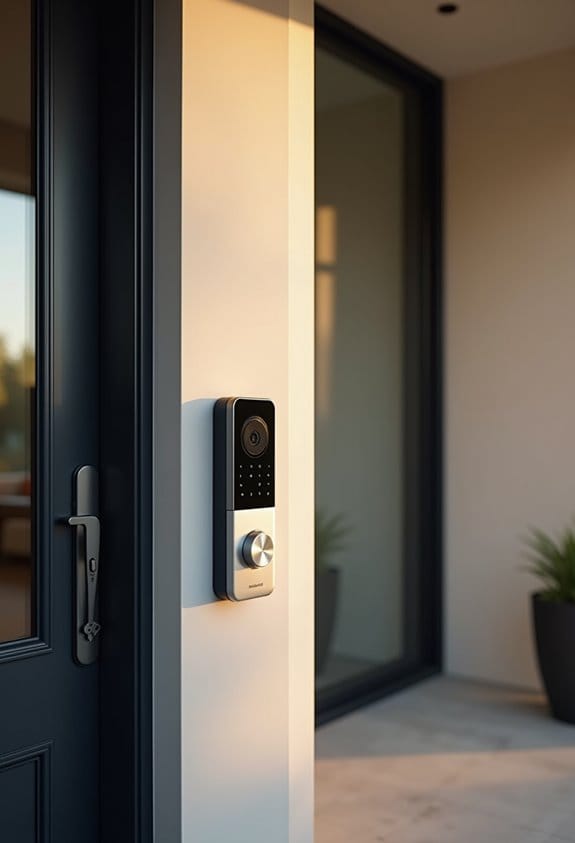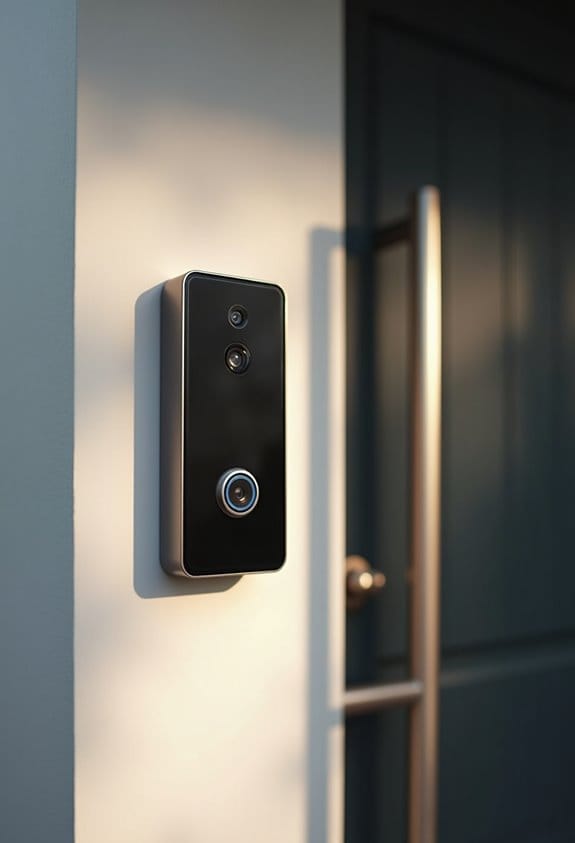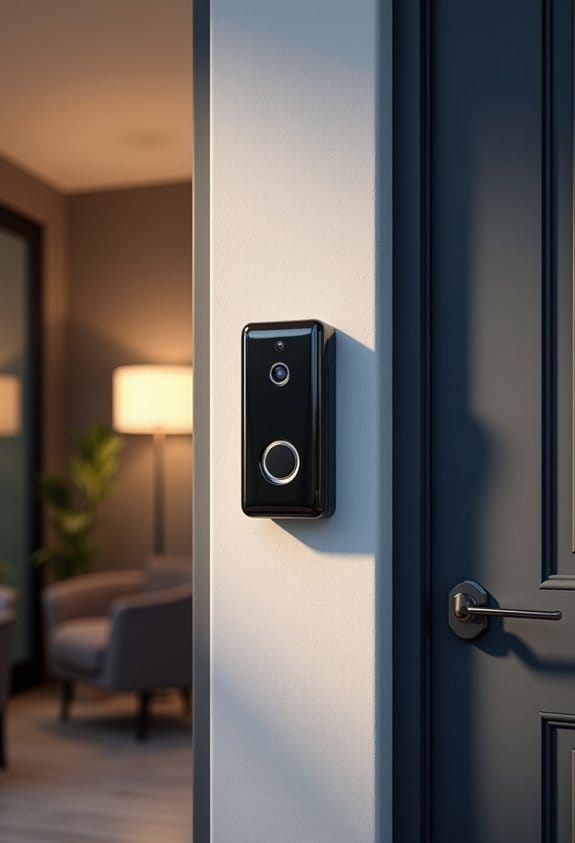

When it comes to doorbell cameras, we often face the choice between infrared (IR) and color night vision. IR night vision uses invisible light to capture clear black-and-white images in total darkness, making it great for stealth monitoring. In contrast, color night vision amplifies ambient light for full-color images, ideal in low-light but not dark conditions. Each has its advantages for security, and understanding them helps us make an informed decision. Let’s explore how to choose the best option for our needs.
Key Takeaways
- IR night vision uses invisible light for clear black-and-white images in total darkness, ensuring discreet surveillance.
- Color night vision enhances low-light footage with full color, benefiting identification of details like clothing and vehicle colors.
- Hybrid doorbell cameras can switch between IR and color modes, offering versatility based on ambient lighting conditions.
- IR night vision excels in complete darkness, while color night vision performs better in low-light environments with some illumination.
- Higher resolution cameras (2K or 4K) provide clearer nighttime images, aiding in effectively identifying visitors and vehicles.
What Is Infrared (IR) Night Vision and How Does It Work?

Infrared (IR) night vision technology transforms the way we see in complete darkness, making it an essential tool for surveillance and monitoring. This technology uses infrared LEDs to emit invisible light that allows cameras to capture clear black-and-white images, even in low-light conditions. When ambient light levels drop, the infrared LEDs activate automatically, enabling us to monitor environments without external light sources. An IR cut filter may retract, optimizing the camera’s sensitivity to darkness. Although effective, IR night vision images are monochrome, which limits color identification. However, IR cameras operate discreetly without alerting intruders, enhancing safety in sensitive areas. This seamless shift from light to dark guarantees reliable surveillance in complete darkness. Many doorbell cameras also offer color night vision capabilities, providing more detailed and vibrant images in low-light environments.
Best Use Cases for IR and Color Night Vision

When we’re considering the best use cases for IR and color night vision, it’s essential to understand how each technology can effectively serve different situations. IR night vision excels in complete darkness, offering discreet infrared illumination. This makes it ideal for nighttime security, capturing clear black-and-white footage without alerting potential intruders. On the other hand, color night vision cameras perform better in well-lit spaces, providing full-color images that enhance detail identification of individuals or vehicles. Hybrid doorbell cameras offer the best of both worlds, with the ability to make a seamless shift from black-and-white to color when motion is detected, making them versatile for residential doorbell applications and especially effective for identifying package thieves. Many top models use infrared LEDs to provide exceptional night vision clarity up to 12 meters in dark environments.
The Benefits of Color Night Vision for Enhanced Security

Color night vision technology offers significant advantages for enhancing security systems in both residential and commercial environments. Unlike traditional infrared systems that produce monochrome images, color night vision captures full-color footage in low-light conditions by amplifying ambient light. This means we can identify vital details, like clothing colors and vehicle information, that might be missed in black-and-white footage. With the use of high-sensitivity sensors and advanced Starlight sensors, these security cameras operate effectively even in minimal light, ensuring enhanced clarity. Additionally, some systems feature motion detection and built-in spotlights to illuminate areas when movement is detected, acting as a deterrent to potential intruders. Overall, color night vision greatly increases our ability to monitor and protect our properties. Moreover, the infrared night vision capabilities provide visibility up to 33 feet, ensuring reliable monitoring during nighttime conditions.
How Do IR and Color Night Vision Compare?
Understanding the differences between IR and color night vision technologies is essential for those looking to enhance their surveillance systems effectively. IR night vision primarily captures images in black-and-white using invisible infrared light, allowing it to operate in total darkness, which is great for stealth monitoring. In contrast, color night vision amplifies ambient light to generate full-color images, making it ideal for recognizing details, but it needs some light or spotlights to perform well. Cameras using dual-light technology balance both methods, switching to IR mode in darkness and activating spotlights for motion detection. While IR offers discreet surveillance, color night vision can reveal camera locations, affecting the stealth of monitoring when used in sensitive areas. For optimal security, many doorbell cameras also incorporate advanced night vision features like color night vision technology and infrared LEDs to ensure clear visibility in various lighting conditions.
How to Choose Night Vision Technology for Your Doorbell
Choosing the right night vision technology for your doorbell is vital for effective home security. First, evaluate your entryway’s lighting conditions. If you have ambient light, color night vision will provide vivid images, helping with visitor identification. In complete darkness, infrared (IR) night vision offers clear black-and-white footage for discreet monitoring. For versatility, consider hybrid options that automatically switch between IR and color modes when motion is detected. This guarantees energy efficiency while offering detailed color footage. Additionally, assess the camera resolution; models with 2K or 4K resolution deliver clearer images, essential for recognizing faces and vehicle details in night surveillance. By thoughtfully selecting the technology, we can enhance our home’s security effectively. Moreover, integrating doorbell cameras with dual-zone motion detection can optimize monitoring by targeting specific areas for movement alerts.
Frequently Asked Questions
Is Infrared Better Than Color Night Vision?
We can’t deny infrared technology shines in total darkness, but color night vision’s unmatched color accuracy and environmental adaptability often outclass it. Both excel under different lighting conditions, so considering our specific application scenarios and user preferences is key.
What Is the Difference Between Color Night Vision and Night Vision?
Color night vision captures higher image quality in low-light conditions, enhancing object detection and surveillance applications, while traditional night vision is more power-efficient and cost-effective. Ultimately, our user preferences, focal length, and sensor technology shape our choices.
Is IR Better Than Night Vision?
We believe IR night vision’s advantages in low light performance and stealth often outweigh its infrared limitations. However, user preferences for color accuracy and image clarity may lead others to prefer color options for specific applications.
What Is the Difference Between Ring Color Night Vision and Night Vision?
Ring Color Night Vision enhances video quality by providing color detection in low light, improving image clarity. Its motion sensing and advanced camera technology offer unique security features tailored to user preferences compared to traditional night vision.