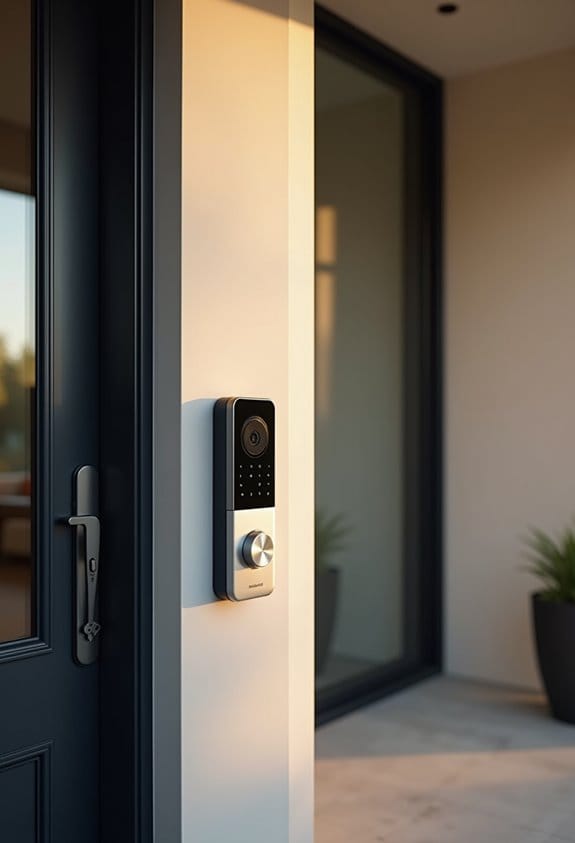
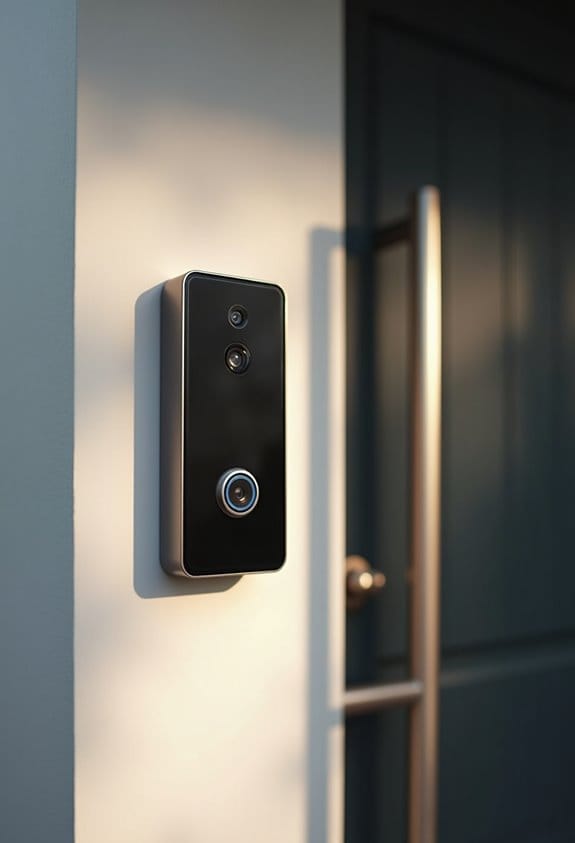
Smart doorbells face several cybersecurity risks, including weak default passwords and outdated software. To reduce these risks, we should set strong, unique passwords with at least 12 characters and enable two-factor authentication. Regularly updating firmware and linked apps helps close security gaps. Using reputable brands like Ring or Nest guarantees better safety features. Additionally, configuring a guest network for visitors protects our personal data. By following these steps, we can enhance our smart doorbell security markedly and discover further insights ahead.
Key Takeaways
- Change default passwords immediately and create strong, unique passwords to enhance smart doorbell security against unauthorized access.
- Enable two-factor authentication to add an extra layer of protection against potential breaches and unauthorized logins.
- Regularly update firmware and software to address known vulnerabilities and minimize exposure to cyber threats.
- Choose reputable brands recognized for prioritizing security, providing regular updates, and effective response to vulnerabilities.
- Utilize a guest network for visitors, isolating smart doorbells from personal devices to reduce the risk of data breaches.
Common Security Flaws in Smart Doorbells

When we consider the security of smart doorbells, it’s important to recognize the common flaws that make these devices particularly vulnerable to attacks. Many video doorbells come equipped with default passwords that cyber attackers can easily guess, opening the door to unauthorized access. Additionally, some models lack vital security protocols like two-factor authentication and data encryption. This means that our data privacy is at risk. Certain devices also exhibit security vulnerabilities, like key reinstallation attacks (KRACK), which target Wi-Fi processes. Consumer Reports has found that many smart doorbells available on platforms like Amazon may lack necessary FCC registration codes, raising concerns about compliance with consumer protection standards. Addressing these issues is essential for enhancing our overall safety. Implementing AI-powered motion detection can improve security by reducing false alarms and ensuring accurate alerts, thereby strengthening the reliability of smart doorbell monitoring.
The Importance of Strong Passwords and Two-Factor Authentication

Security in our digital lives hinges greatly on strong passwords and effective authentication methods. For our smart doorbells, using strong, unique passwords is essential. Studies show about 15% of IoT owners never change default passwords, increasing vulnerability to cyber threats. Implementing two-factor authentication (2FA) creates an extra layer of security, making unauthorized access very difficult, even if passwords are compromised.
To protect ourselves, we should use passwords that are at least 12 characters long, incorporating uppercase and lowercase letters, numbers, and symbols. Regularly updating passwords—especially after a potential breach—is critical for maintaining robust password management practices. Additionally, we must confirm our smart doorbells use encryption to meet security standards, greatly reducing risks of hacking attempts against our connected devices. Choosing devices compatible with popular smart home integration platforms can also enhance overall security through consolidated device management.
Keep Your Smart Doorbell Secure With Regular Updates

Outdated software can make our smart doorbells vulnerable to cyber threats, despite having strong passwords and two-factor authentication in place. To protect against unauthorized access and data breaches, we must prioritize routine updates. Regularly updating our device’s firmware helps close security gaps identified by manufacturers, reducing the risk of hackers exploiting known vulnerabilities. Enabling automatic updates is one of the best cybersecurity practices; this way, we’ll receive the latest security enhancements without having to remember. Additionally, we should confirm that the smart doorbell’s app and any linked cloud services are also updated. Staying proactive with these routine updates is essential for maintaining our smart doorbell’s overall device security in a constantly evolving cyber landscape. Furthermore, understanding and configuring privacy zones can help limit recorded areas, enhancing both security and compliance with privacy regulations.
Smart Doorbell Configuration Tips
To guarantee our smart doorbell operates securely and efficiently, we should pay close attention to its configuration settings. First, let’s set a strong, unique password for our device, avoiding default options that attackers might guess. Next, we should enable two-factor authentication within the app, adding an extra layer of security. Regularly updating software and firmware is essential to protect against security risks. If our doorbell lacks encryption or two-factor authentication, it’s wise to remove it from our network. We should also consider investing in well-established brands, like Logitech or Ring, which are known for robust security measures. Finally, using a guest network for visitors can help safeguard our personal data from potential breaches. Additionally, configuring customizable alerts can provide tailored notifications that enhance security awareness and response times.
How to Pick the Safest Smart Doorbells?
Choosing a smart doorbell isn’t just about convenience; it’s also about safety. To pick the safest smart doorbells, we should focus on well-established brands like Logitech, Nest, Ring, and SimpliSafe. These brands are known for better security measures and responsive customer support. Look for models with features like two-factor authentication and data encryption, which help protect against unauthorized access. Checking the manufacturer’s history for past vulnerabilities, as highlighted by Consumer Reports, can indicate their commitment to safety. We must also guarantee that our chosen doorbell provides regular software updates to fix security flaws. Finally, remember to change default passwords right after installation, as leaving them unchanged can greatly increase the risk of unauthorized access. Additionally, selecting models with HomeKit Secure Video Compatibility ensures encrypted recordings stored securely in iCloud, enhancing privacy and protection.
Cyber Insurance: Protecting Your Smart Home
As our homes become smarter, the need for cyber insurance is increasingly important. Smart home devices, including doorbells, can expose us to risks like data breaches and identity theft. Cyber insurance protects us from financial losses due to cyber-attacks on these devices. We can add this coverage to our existing homeowners’ policies or buy it as standalone insurance. It often covers costs associated with device reprogramming and forensic investigations needed after a breach. Given the rising concerns around data privacy, many of us are seeking financial protection in the event of cyber threats. This insurance can provide peace of mind, allowing us to take proactive measures to safeguard our homes from potential cyber incidents. Choosing devices with encrypted cloud storage can further enhance the security of your smart doorbell data.
Future Trends in Smart Doorbell Security and Accountability
While the future of smart doorbell security is evolving, several trends are emerging that could greatly impact consumer safety and accountability. Upcoming FCC cybersecurity labels will offer clearer insights into the security standards of smart doorbells, showcasing manufacturers’ commitment to cybersecurity. We can expect increased collaboration among manufacturers, resulting in unified security standards for better safety. Additionally, the rise of innovative cybersecurity insurance products will give us extensive protection plans against privacy risks and data security threats related to smart doorbells. With heightened regulatory scrutiny, online retailers will be held accountable for the products they sell, ensuring manufacturers comply with strict security measures. Finally, consumer awareness initiatives will educate us on vulnerabilities, promoting better security practices among homeowners. Enhanced AI motion detection technology will also play a crucial role in reducing false alerts and improving the accuracy of security notifications.
Frequently Asked Questions
Can Smart Doorbells Be Hacked Remotely?
Yes, smart doorbells can be hacked remotely due to network vulnerabilities and security flaws. By ensuring strong user authentication, regular firmware updates, and data encryption, we can minimize privacy concerns and unauthorized access risks.
What Are the Signs My Smart Doorbell Has Been Compromised?
If we notice unusual activity, delayed notifications, or frequent login attempts, it’s essential to check for unauthorized access. Firmware updates, connection issues, or poor video quality could also signal a compromise, so we should follow reset procedures.
Do Smart Doorbells Store Data Permanently?
Smart doorbells often use cloud storage, but they don’t permanently store data. Through data encryption, regular firmware updates, and strict usage policies, manufacturers aim to safeguard user privacy while managing data retention and remote access securely.
How Do I Dispose of a Smart Doorbell Securely?
To dispose of our smart doorbell securely, we should perform a factory reset, then explore e-waste recycling options, check manufacturer return policies, and follow local disposal guidelines to guarantee environmental impact awareness and data erasure.
Are There Any Legal Regulations on Smart Doorbell Data Usage?
Sure, we’re traversing a maze of regulations on data privacy, user consent, and compliance requirements. Legal implications vary, but understanding industry standards and consumer rights helps us mitigate risks like data breaches through regular security audits.