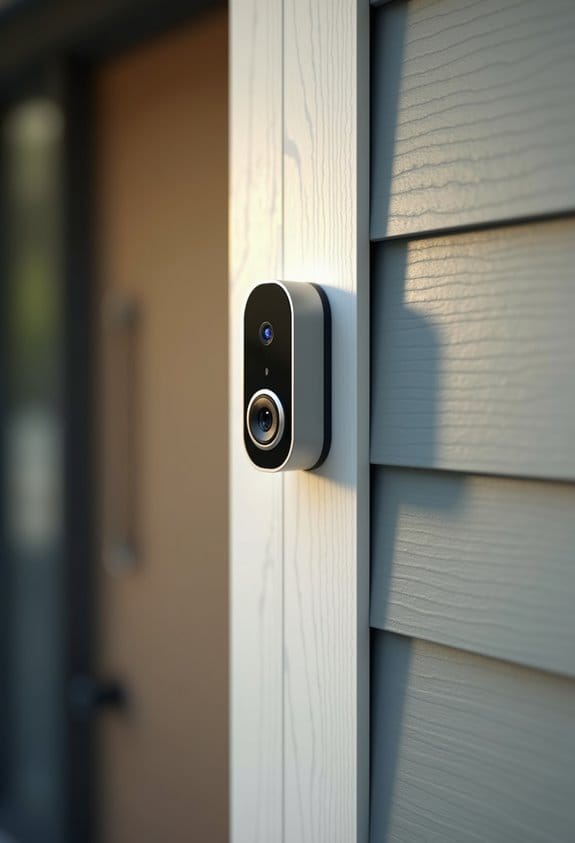
Doorbell chime kits consist of a push-button, chime unit, and transformer, typically converting 120V to 16-24V AC for safe operation. They alert us to visitors, which enhances home security. We need them when installing smart doorbells without internal chimes or replacing faulty units. Wired kits provide stable power, while wireless kits eliminate installation hassles. Common issues include incorrect wiring or signal interference. If you encounter challenges or want to know more about your options, we can guide you further.
Key Takeaways
- Doorbell chime kits consist of a button, chime unit, and transformer, enabling visitor alerts through wired or wireless connections.
- Transformers convert 120V to 16-24V AC to safely power wired chime systems and ensure compatibility with smart doorbells.
- Wired kits provide reliable power supply and performance longevity, while wireless kits facilitate easier installation but may face signal issues.
- Installation requires ensuring secure connections and verifying compatibility with existing systems to prevent operational failures.
- Upgrading to smart doorbell kits enhances convenience and complements systems lacking internal chime functionality.
What Is a Doorbell Chime Kit and How Does It Work?
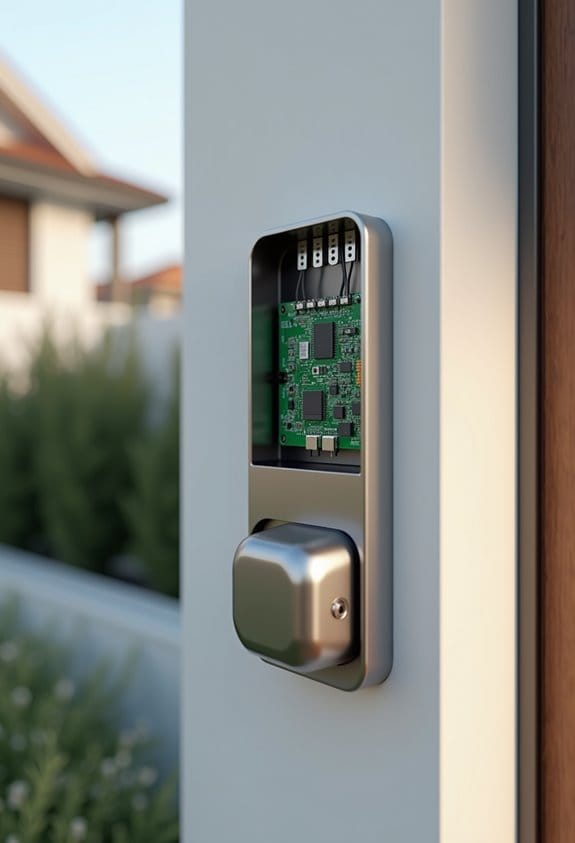
A doorbell chime kit is a fundamental addition to any home, providing a reliable way to alert us when visitors arrive. This kit typically includes three essential components: a button, a chime unit, and a transformer. The transformer converts our standard home voltage of 120V to a low voltage between 16-24V AC, guaranteeing safety while powering the chime unit. For those looking to install a doorbell, wired chime kits require connecting wires from the transformer to the chime and button. Alternatively, smart doorbell kits offer features like app integration, eliminating the need for wiring by using radio signals. Proper installation is vital to guarantee the system operates reliably without power loss or failures when the button is pressed. Choosing a transformer with the correct output voltage rating is crucial to ensure optimal doorbell functionality and long-term reliability.
Benefits of Doorbell Chime Kits
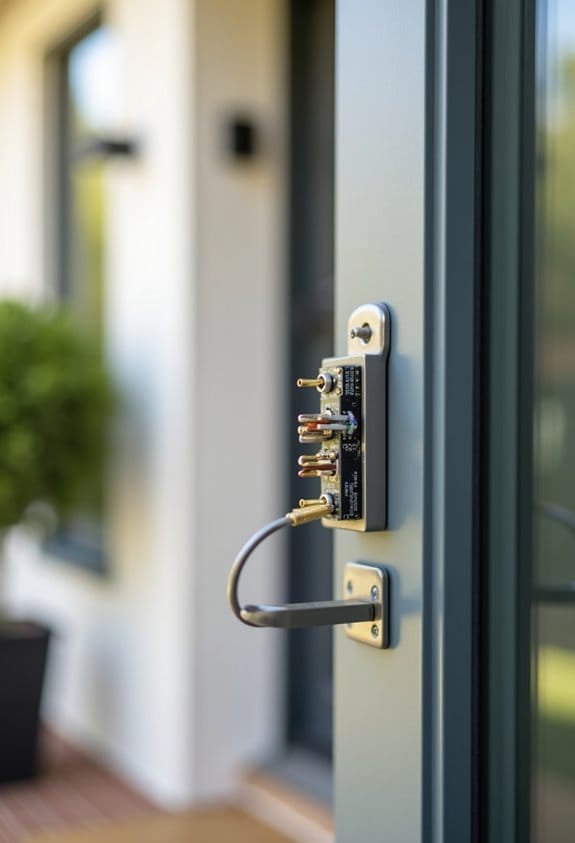
Integrating a doorbell chime kit into our home offers several advantages that enhance our overall visitor notification experience. First, these kits guarantee we hear visitors, even from a distance, by providing an audible alert when the doorbell button is pressed. For smart doorbells, like video doorbells, that lack internal chime functionality, a chime kit is essential. It optimizes power delivery, enhancing compatibility with wireless doorbell systems. Installation is straightforward; most kits include all necessary components, such as connectors and screws, making it easy for DIY enthusiasts. Additionally, having a reliable doorbell chime improves our home security, assuring we are always aware of who’s at our door, contributing to a safer living environment. Many kits also feature adjustable volume settings to ensure the alerts are audible even in noisy environments.
When Should You Choose a Doorbell Chime Kit?
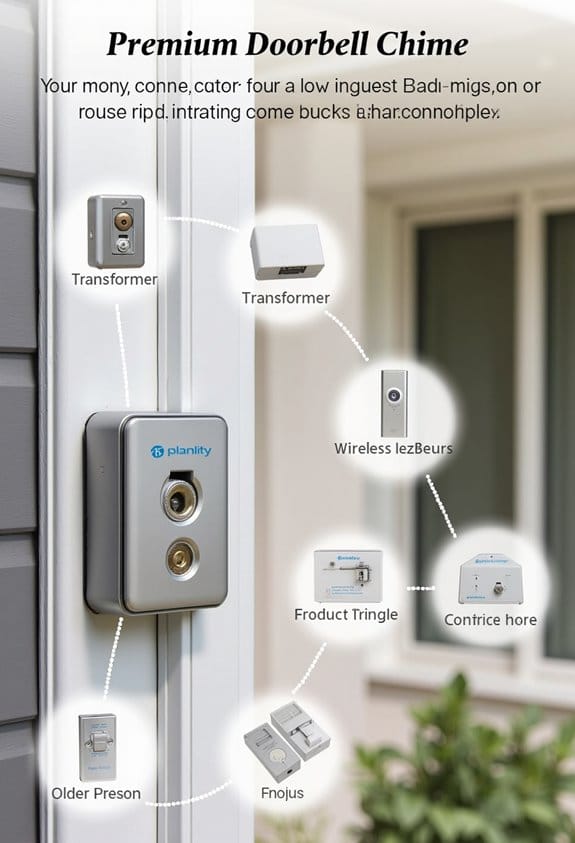
When should we choose a doorbell chime kit? If we’re installing a new system without an existing chime, a doorbell chime kit is vital for audible alerts inside our home. This is particularly important for smart doorbells, which often require a chime that can handle their specific power requirements and compatibility. If the current chime doesn’t support smart features or simply isn’t working, opting for a chime kit is important. An example is the Chime Kit Mini for Ring doorbells, designed for peak performance. Additionally, during an installation upgrade, we should verify the new doorbell is compatible with our chime kit, especially if it requires unique components that traditional chimes don’t provide. Selecting a kit with adjustable microphone sensitivity is also beneficial to minimize false alerts and enhance performance.
Exploring Different Types of Doorbell Chime Kits
Exploring the various types of doorbell chime kits can help us make informed decisions for our home. First, wired chime kits rely on low-voltage wiring, connecting the doorbell button to the chime unit. This option is dependable for traditional setups. Alternatively, wireless chime kits eliminate the need for extensive installation, utilizing radio signals with a range of about 150 feet. For those interested in modern technology, smart doorbell chime kits connect via Wi-Fi, offering features like remote access and customizable alerts through mobile apps. Additionally, chime kits that include a plug-in transformer simplify installations in locations without existing wiring. Many smart doorbell systems also integrate with smart home systems such as Amazon Alexa and Google Assistant to enhance functionality and convenience. Understanding these options guarantees we choose the right doorbell system to meet our needs effectively.
Installing Your Doorbell Chime Kit: A Simple Guide
Installing a doorbell chime kit can be straightforward and efficient if we follow a few essential steps. First, we need to turn off the power at the circuit breaker. For a wired chime, mount the chime snugly and connect the wires to the transformer’s terminals, guaranteeing a secure fit. If you’re using a battery-operated chime, make sure it’s fully charged before installation. Follow the manufacturer’s instructions for any associated apps. Once everything is in place, we must conduct testing to confirm that the chime is properly wired and operational. For smart doorbell kits, additional Wi-Fi setup may be necessary, and we might use a Chime Kit Mini to guarantee the doorbell sound is transmitted effectively throughout the home. Many AC-powered doorbell chimes feature non-polarity wire designs that simplify the installation process.
Common Installation Issues With Doorbell Chime Kits
Although we aim for a smooth installation, several common issues can arise with doorbell chime kits. One major problem is incorrect doorbell wiring, which can lead to non-functioning chimes or buzzing noises. Ensuring the transformer provides 16-24V AC is vital; inadequate power can result in weak sound or no sound at all. Also, when installing a doorbell, we may face compatibility issues, especially with smart devices like newer Ring models, which may require a Pro Power Kit. Wireless kits can experience signal interference if walls are too thick or other electronics are nearby, causing the chime inside to falter. In some cases, if using a Chime Kit Mini, bypassing the original chime is essential to receive notifications. Selecting a transformer with the correct voltage and current rating can prevent many common operational problems.
Troubleshooting Your Doorbell Chime Kit
When troubleshooting your doorbell chime kit, it is essential to systematically assess each component for potential issues. First, we should verify that power has been restored at the circuit breaker. Next, let’s examine all wiring connections between the doorbell, chime kit, and transformer; they must be secure. If the chime doesn’t sound, it could mean there’s an insufficient power supply, which might require a voltage tester or, in some cases, an electrician. If we’re using a Chime Kit Mini, we must confirm the TRANS wire is still connected to the original chime. For synchronization problems, using wire nuts can secure connections. Always follow manufacturer guidelines to prevent further issues. Additionally, ensure that the transformer’s voltage and VA ratings match the requirements of your doorbell system to avoid power inconsistencies.
Upgrade Your Home With Smart Doorbell Chime Kits
Upgrading to a smart doorbell chime kit can greatly enhance our home’s convenience and security. These kits, like the Ring Chime Kit Mini, connect to our doorbell camera, alerting us indoors when someone rings. If the doorbell requires power, we’ll need a transformer, especially if it doesn’t use an internal chime. When we install a new kit, turning off the power at the circuit breaker is essential. We’ll also need to connect low-voltage wires securely, sometimes using wire nuts. If we forget this step, our system could fail. Once everything’s set, we can turn the power back on and test the system for proper operation. Upgrading our doorbell technology truly creates a smarter home experience. It’s also important to confirm the compatibility with existing systems to ensure seamless integration and avoid potential installation issues.
Wired vs. Wireless Doorbell Chime Kits: What’s Right for You?
Choosing between wired and wireless doorbell chime kits involves understanding the unique benefits and limitations of each option. Wired doorbells consist of a button, chime, and a transformer connected to a fixed low-voltage power source, making for a reliable and permanent installation. They work with a transformer output of 16-24V AC, ensuring a stable power supply. On the other hand, wireless doorbells use radio signals for communication, offering flexible placement without extensive wiring. However, they’re subject to battery life and potential signal interference. For those living in rentals or seeking easier installation, wireless options are ideal. Meanwhile, wired kits appeal to those who prioritize dependability and long-lasting performance in their doorbell setups. It is also important to consider the transformer voltage to ensure compatibility and optimal operation of the doorbell system.
Frequently Asked Questions
Do You Need an Electrician to Install a Doorbell?
We don’t necessarily need an electrician for doorbell installation, especially with low voltage and wireless options. However, for certain wired types and wiring requirements, a pro guarantees home safety and chime compatibility through proper installation.
Can a Ring Doorbell Work Without a Chime?
Absolutely, a Ring doorbell can work without a traditional chime! With Ring integration, we’ll enjoy smartphone notifications and wireless capability, plus motion detection benefits, though we might miss the audible alert indoors. Let’s enhance our user experience!
How Does a Doorbell Chime Box Work?
A doorbell chime box converts electrical voltage into sound through various chime mechanisms. We can guarantee proper installation by addressing compatibility issues and following troubleshooting tips; regular maintenance keeps our chime functional and enhances sound production.
Where to Install a Doorbell Chime?
For best doorbell chime performance, let’s install it at ear height, avoiding obstructions. While wiring requirements matter, choosing sound options and considering visual design enhance both functionality and electrical safety in various locations.