When we’re installing a doorbell transformer, we need to guarantee it converts 120V to an output of 16–24V AC, since this range is standard for most doorbells. It’s essential to check the transformer’s VA rating, especially for smart doorbells, which usually need at least 30VA. We should inspect existing wiring for damage and verify voltage with a multimeter to guarantee safety. By following these steps, we can prevent common installation issues and improve our doorbell system’s reliability.
Key Takeaways
- Ensure the transformer output is between 16V-24V AC, suitable for your doorbell system’s requirements.
- Verify the VA rating, especially for smart doorbells, which often need a minimum of 30VA.
- Inspect existing wiring for wear, test voltage at both transformer and doorbell for safety compliance.
- Follow NEC guidelines for installation, prioritizing safety and future accessibility for inspections.
- Consult a professional if unsure to ensure compliance with local safety regulations and proper functionality.
What Is a Doorbell Transformer and How Does It Work?

A doorbell transformer is an integral component for any modern doorbell system. It converts standard 120V line voltage to a low voltage output, typically ranging from 16V to 24V AC. This conversion is vital for the safe operation of both traditional and smart doorbells. By meeting the power requirements of our specific doorbell chime, we guarantee proper function and avoid potential malfunctions.
These transformers are classified as Class 2 devices, so they feature separated primary and secondary windings for safety. It’s important for us to choose a transformer that matches the required voltage and proper VA rating. When installing, we should locate the transformer in accessible areas—like chime boxes or near electrical panels—making sure it’s not concealed for compliance with safety regulations. Choosing a transformer with built-in protections such as short-circuit protection and compliance with safety standards ensures enhanced safety and durability.
Understanding Voltage Specifications: Why 16–24V Matters for Your Home
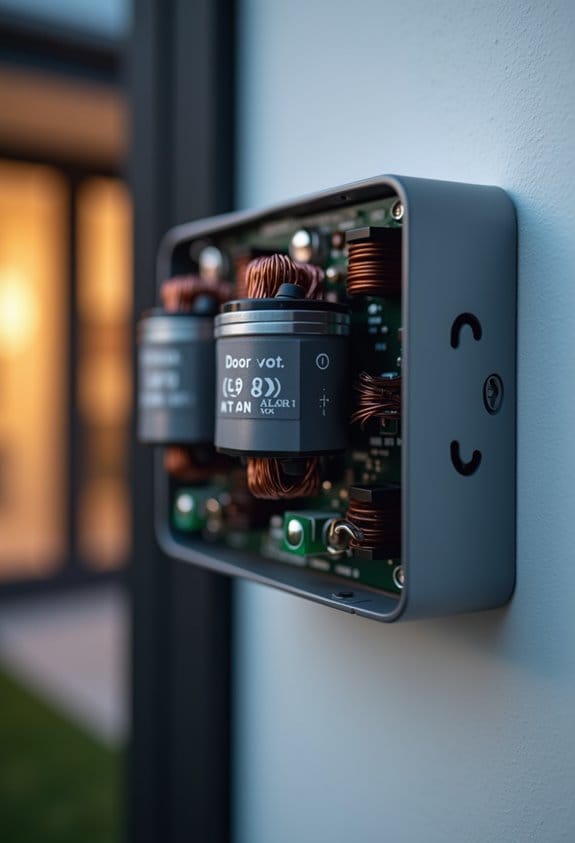
Understanding the voltage specifications for doorbell transformers is key to ensuring our doorbell systems function reliably. Most doorbell transformers reduce standard 120V AC to a safe range of 16 to 24V AC, which is essential, especially for modern smart doorbells like Ring or Nest, requiring 16V-24V and up to 30VA. If we use a transformer with inadequate output, our doorbell may malfunction or fail. Conversely, a transformer that exceeds the voltage specifications can cause overheating or damage. To safeguard our doorbell systems, we need to match the transformer’s rated output to the manufacturer’s requirements. Ensuring the transformer meets the voltage and power ratings guarantees the longevity and consistent performance of our doorbell systems. It is also important to look for transformers with UL certifications to enhance safety and reduce the risk of electrical issues.
Essential Factors for Choosing the Right Doorbell Transformer

How do we choose the right doorbell transformer to guarantee it meets our needs? First, let’s confirm the transformer provides an output voltage of 16V-24V, which is standard for most doorbell systems. Next, we should check its VA (Volt-Amps) rating; smart doorbells often require at least 30VA, exceeding the 10VA found in standard transformers. Additionally, let’s verify that the transformer is properly sized for the load, as an overloaded transformer can overheat. We must also consider the installation location; it should be easily accessible and compliant with NEC guidelines. Finally, we’ll want transformers that are compatible with both traditional and smart doorbells to confirm we’re covered for future needs. Also, it is important to select a transformer with auto-resetting PTC fuses to prevent overheating and ensure safe operation.
Inspecting Your Doorbell System: Steps to Follow
What steps should we follow to effectively inspect our doorbell system? First, we need to check the existing wiring for any signs of wear or damage. This guarantees our doorbell transformer wiring is intact, maintaining proper functionality. Next, we should verify that the power rating of our doorbell aligns with the specifications of the transformer, as some smart doorbells may require higher VA ratings. After that, we’ll want to test voltage at both the transformer and the doorbell wires to confirm a safe power supply. Finally, let’s confirm the transformer is accessible for any future inspections or replacements, in line with NEC guidelines that prevent concealing these units. This systematic approach helps us avoid issues before installation. Additionally, ensuring the transformer has proper safety certifications is essential for safe operation and long-term reliability.
How to Verify Voltage With a Multimeter
Verifying voltage with a multimeter is an essential step in confirming your doorbell system functions correctly. First, we should set our multimeter to the appropriate AC voltage range, usually above 24V. Next, we’ll test the primary side by placing the probes on the black (hot) and white (neutral) wires, expecting a reading near 120V. For the secondary side, we’ll attach the probes to the low-voltage terminals, where the output should be between 16V and 24V. If the voltage is lower than expected, we might need to check for loose connections, damaged wires, or issues with the AC doorbell transformer. Finally, verify the multimeter is calibrated to confirm accurate voltage readings before proceeding. It is also important to ensure that the transformer has the proper power output rating to match your doorbell system for optimal performance and safety.
What to Watch Out for When Upgrading to a Smart Doorbell?
Upgrading to a smart doorbell can seem overwhelming, but we can simplify the process by paying close attention to a few critical factors. First, we need to check the specifications of our existing doorbell transformer. Most smart doorbells, like the Ring Doorbell Pro, require at least 16V-24V and 30VA. If our current transformer only outputs 10VA, we must replace a doorbell transformer to meet these demands. Additionally, we should verify that our wiring is sufficient; inadequate gauge can cause voltage drops, hindering performance. Finally, make certain the transformer is accessible for any future maintenance. Taking these steps guarantees our smart doorbell functions effectively, providing us with the reliability we expect. It is also important to select transformers with UL/CSA certification to ensure safety and long-term reliability.
Safety Tips Before Installing Your Doorbell Transformer
Before we start installing our doorbell transformer, it’s important to prioritize safety to prevent any accidents. First, we should always turn off the circuit breaker that powers the doorbell system. This guarantees there’s no electrical current when we work. To confirm this, using a multimeter or a non-contact voltage tester at the junction box is a good idea. Next, we need to wear insulated gloves and use tools with insulated handles. This reduces the risk of electric shock during the installation. Additionally, following the National Electrical Code (NEC) guidelines for Class 2 transformers is vital for compliance. Finally, if we encounter difficulties with the installation, consulting a licensed electrician guarantees safety and adherence to best practices. It is also important to ensure the transformer is UL certified to provide protection against power surges and electrical faults during operation.
When to Call a Professional for Doorbell Transformer Installation
Although many homeowners might feel comfortable handling basic electrical tasks, there are several key situations where calling in a professional electrician for doorbell transformer installation becomes necessary. If we’re unfamiliar with electrical systems or lack experience in wiring, it’s safer to seek help. Upgrading to smart doorbells, which may need higher power, can complicate transformer sizing. When installation involves tricky areas like attics or walls, a professional can handle these challenges more efficiently. If we encounter issues with a faulty transformer or intermittent problems, troubleshooting can be complex; an expert can diagnose wiring and compatibility issues better. Additionally, consulting a professional guarantees compliance with local safety regulations, reducing the risk of future failures. Proper installation also ensures the efficient operation of your doorbell and any connected devices.
Frequently Asked Questions
How to Check if a Doorbell Transformer Is Good?
So, we’re not electricians, huh? To check if a doorbell transformer’s good, we’ll use a multimeter for voltage ratings, ascertain transformer compatibility, and follow installation tips while tackling any troubleshooting methods that arise.
How to Test a 24V Doorbell Transformer?
To test a 24V doorbell transformer, we’ll use a multimeter set to AC voltage. Checking circuit continuity and performing load testing helps identify issues; remember to follow troubleshooting tips for accurate results and safety.
Should I Use 16 or 24V for a Doorbell?
We should use a 24V transformer if our doorbell’s power requirements demand it. By comparing voltage types, we can guarantee bell compatibility. Let’s keep installation tips in mind to prevent any future malfunctions!
Is It Safe to DIY Doorbell Transformer Wiring?
Yes, DIY doorbell transformer wiring can be safe if we follow safety precautions, use proper wiring techniques, and avoid common mistakes. We’ll need tools and troubleshooting tips to guarantee everything works correctly.