
Weather exposure impacts construction placement considerably. Rain can saturate untreated materials, like wood and drywall, leading to replacements. High humidity complicates concrete curing, risking structural integrity. Heat accelerates water evaporation, hindering the strength of concrete. It’s crucial to monitor humidity levels and use weather-resistant materials. Implementing drainage solutions during rain helps manage excess water. By understanding these factors, we can guarantee projects remain safe and durable. More insights on managing these challenges await you.
Key Takeaways
- High humidity during rain can damage untreated materials like wood and drywall, necessitating replacements and delaying construction.
- Rain complicates concrete placement, risking lower compressive strength and structural integrity when poured in wet conditions.
- Extreme heat accelerates water evaporation from concrete, hindering hydration and potentially weakening the overall strength.
- Moisture accumulation from rain increases risks of accidents due to slippery surfaces, emphasizing the need for safety precautions.
- Selecting weather-resistant materials and monitoring humidity levels is crucial for ensuring durability and preventing mold growth during construction.
Understanding the Connection Between Rain and Humidity in Construction
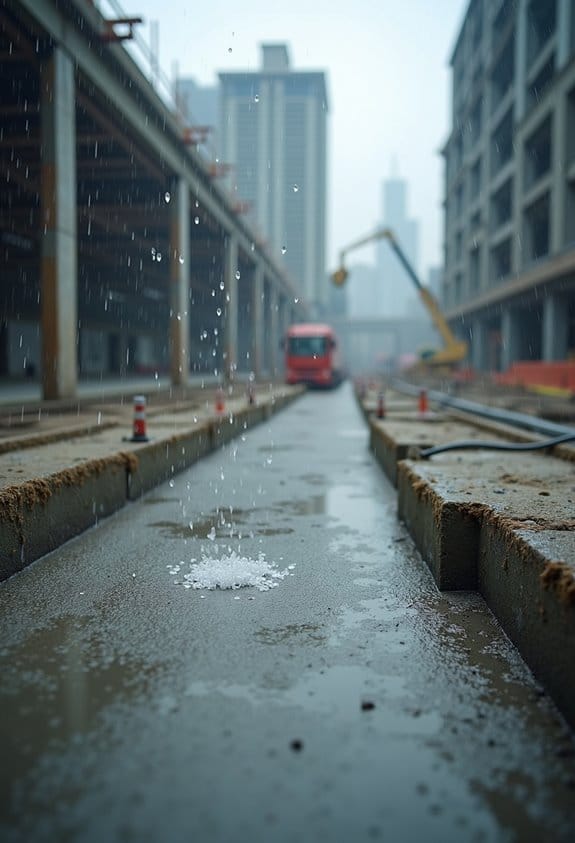
When we consider how rain impacts construction, it’s important to recognize that high humidity often accompanies it. Rain elevates humidity levels to nearly 100%, filling the air with moisture that influences material performance. For instance, prolonged rainfall can saturate untreated wood and drywall, making them susceptible to water damage. When we pour concrete, high humidity may complicate the curing process, weakening the mix and risking structural integrity. Additionally, monitoring the dewpoint temperature is essential; a rise during rain indicates increased moisture saturation, which can impede our work. In many cases, safety requires us to pause construction during adverse weather conditions, protecting both our team and the materials we’re using. Adjusting our approach during these times is vital. Ensuring that exposed elements have proper weatherproof ratings can help mitigate the negative effects of rain and humidity on construction materials.
How Rain Affects Construction Site Operations and Material Choices
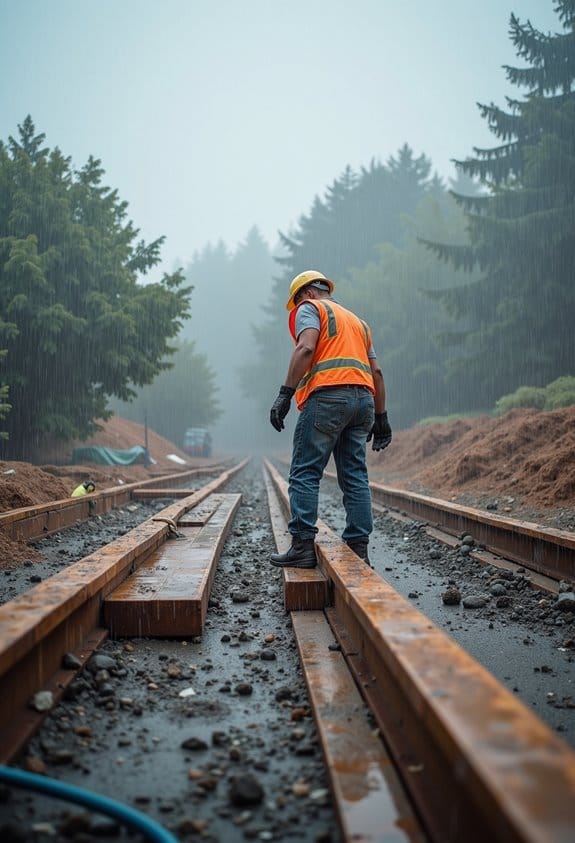
Rain considerably impacts construction site operations and the choices we make regarding materials. Wet soil conditions can delay earthworks, making excavation and grading unsuitable, which disrupts our project timelines. Pouring and curing concrete during rain can compromise its mixture, resulting in lower compressive strength and potential structural issues. Additionally, excess moisture can increase humidity levels, affecting materials like drywall and untreated wood, leading to costly replacements. We also face safety risks, as slippery surfaces can cause accidents among workers. To manage these challenges, we might need to implement temporary drainage solutions or pause work when rainwater accumulates. Staying proactive helps safeguard both our materials and our team’s well-being during wet conditions. Using waterproof sealants can further protect construction elements from moisture damage in such environments.
How Heat and Humidity Can Affect Your Building’s Strength?
While we often focus on the visible effects of weather, the impact of heat and humidity on a building’s strength should not be underestimated. High humidity can weaken the bond of concrete, especially during curing, leading to potential structural deficiencies. Excessive heat accelerates the evaporation of water from cement, hindering its hydration and strength development. The combination of heat and humidity raises the amount of water vapor in the air, causing materials to expand, which increases risks of warping and buckling. Additionally, these conditions facilitate thermal cycling, where daily temperature changes stress materials. Structures lacking proper ventilation may also foster mold growth, compromising material integrity. We must consider these factors to guarantee our buildings remain safe and strong. Incorporating weatherproof designs can enhance the durability and reliability of structures exposed to harsh environmental conditions.
Aligning Construction Design With Local Climate Conditions
To guarantee our buildings are safe and resilient, we must align construction design with local climate conditions. High humidity levels, which can reach 100% during rainfall, require us to select materials that resist moisture and mold growth. In hot areas, heat exposure can cause materials to expand or contract, so we must consider thermal properties and expansion joints. Roofing materials should be chosen carefully in regions with significant precipitation, ensuring proper drainage features to prevent water accumulation. Additionally, in areas with heavy snowfall, designs need to accommodate snow loads, supporting at least 50 pounds per square foot. Utilizing locally sourced materials not only lowers construction costs but also enhances durability, energy efficiency, and longevity in response to local weather conditions. When selecting outdoor security devices like doorbell cameras, it is essential to consider their weather resistance ratings to ensure reliable performance in harsh climates.
Effective Tactics for Navigating Weather Challenges in Construction Projects
In construction, adapting our strategies to manage weather challenges is as important as aligning designs with local climate conditions. To combat high relative humidity, we should monitor levels closely, especially when they exceed 60%. Employing dehumidifiers indoors can help prevent mold growth. In extreme heat, keeping hydrated and scheduling work during cooler hours is essential to protect our team from dehydration. When the outside world presents rain or snow, we must have regular snow removal strategies and guarantee our materials, like concrete, are weather-resistant. Noticing these conditions affect our timelines and material integrity, we can better plan each phase, guaranteeing a safer, more effective construction process while minimizing potential delays caused by unforeseen weather. Additionally, selecting weather-resistant materials for outdoor installations can significantly enhance durability and performance over time.
Frequently Asked Questions
What Are the 4 Main Factors That Affect Temperatures in a Region?
Isn’t it fascinating how our temperatures dance across climate zones? We’ve noticed that elevation impact, season variations, urban heat, and latitude all shape the warmth and chill we experience in our daily lives.
What Is the Relationship Between Humidity and Rain?
We see a direct link between humidity effects and rain patterns; the more it rains, the higher humidity levels become. This climate interaction illustrates weather variability, impacting our comfort and influencing various environmental conditions.
What Are the Factors Affecting the Weather of a Place?
The weather’s affected by climate zones, geographic location, ocean currents, and altitude variations. These factors interplay, shaping the temperatures and conditions we experience in different regions, helping us understand our environment better.
Which Factors Affect the Humidity of a Place?
Isn’t it ironic how simple things like geographic location, ocean currents, vegetation cover, and urban heat can dramatically change humidity levels? Together, we should explore how these factors influence the moisture we experience daily.