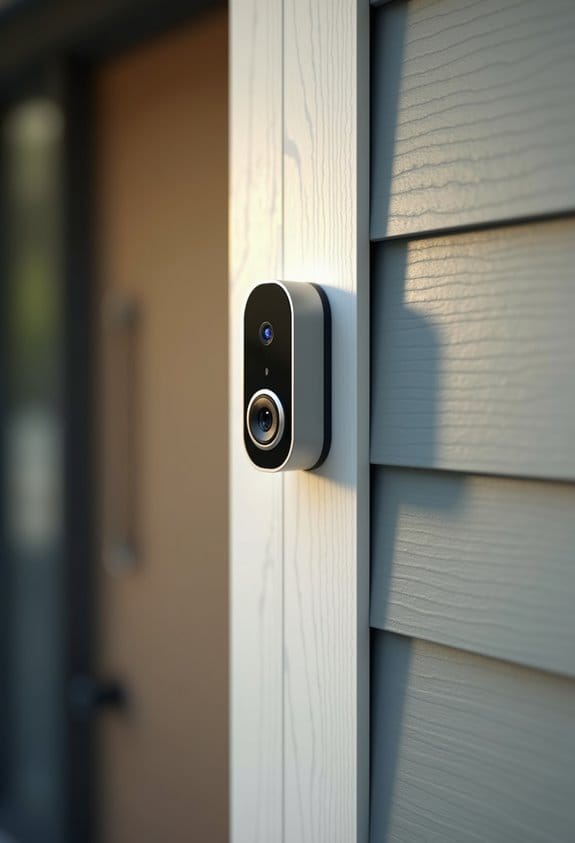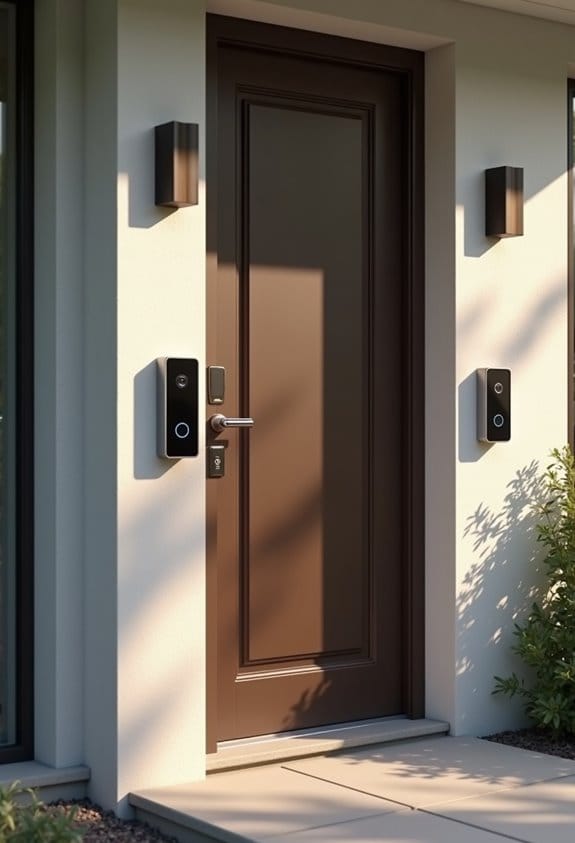

When comparing wired and battery video doorbells, each has its pros and cons. Wired models connect directly to electrical wiring, ensuring reliable performance and HD video quality, but may require professional installation. Battery-powered versions offer easy DIY setup and flexibility in placement, but need regular battery changes. Wired doorbells often incur lower long-term maintenance costs. For renters or locations without wiring, battery doorbells are ideal. To fully understand these options, it’s essential to explore specific features and scenarios.
Key Takeaways
- Wired doorbells offer reliable performance with uninterrupted power supply, making them ideal for high-traffic areas and consistent functionality.
- Battery-operated doorbells provide flexible installation without the need for wiring, suitable for renters or quick DIY setups.
- While wired models incur higher upfront costs, they have lower long-term maintenance expenses with no battery replacements necessary.
- Battery doorbells may struggle with video quality and notification speed when batteries are low, affecting real-time performance.
- Hybrid models blend features of both types, accommodating diverse needs for easy installation and versatile placement.
What Makes Wired and Battery Video Doorbells Different?

When considering video doorbells, understanding the differences between wired and battery-powered models is crucial for making an informed choice. Wired video doorbells connect directly to electrical wiring, offering continuous power and advanced security features like continuous video recording. Their installation process may require existing wiring or professional help, making them more complex. On the other hand, battery-powered models provide flexibility in placement, perfect for renters. However, they need regular battery maintenance to perform efficiently, especially in extreme temperatures. While both types offer smart home compatibility, wired doorbells usually guarantee better performance with stable Wi-Fi connections. Overall, choosing the right model depends on your specific needs and living situation, weighing functionality against convenience. Additionally, many wired and battery doorbells come with advanced motion detection features to reduce false alarms and improve security monitoring.
Understanding the Functionality of Wired and Battery Doorbells

Video doorbells serve as an essential tool for modern home security, offering a blend of convenience and surveillance. Wired doorbells, connected to your home’s electrical system, provide constant power, ensuring uninterrupted functionality. This allows them to utilize advanced features like continuous recording and superior video quality, making them perfect for high-traffic areas. On the other hand, battery doorbells offer flexibility in installation, perfect for renters or those avoiding professional help. However, they require regular maintenance and recharging, which can lead to performance dips if the battery runs low. While both options have their strengths, understanding these functionalities can help us choose the right doorbell that fits our needs, whether we’re focusing on reliability or convenience. Additionally, it is important to consider that wired doorbells typically require a voltage range of 16-24V for optimal operation.
Exploring the Pros of Wired Video Doorbells

Although many may consider the convenience of battery-operated options, wired video doorbells offer significant advantages that enhance home security. First, they provide a constant power supply through your home’s electrical wiring, ensuring uninterrupted functionality without the hassle of battery changes. These wired models enable advanced features like continuous video recording, which is essential for monitoring high-traffic areas. They also deliver superior video quality, offering high-resolution footage that assists in identifying visitors accurately. Additionally, wired video doorbells are reliable, functioning well even in extreme weather conditions that can affect battery performance. While professional installation might be needed initially, they require long-term low maintenance, making them a practical choice for homeowners focused on consistent security solutions. Many wired doorbells offer advanced motion detection capabilities that provide real-time alerts and customizable zones, increasing security awareness around the property.
Exploring the Pros of Battery Video Doorbells
While we might appreciate the appeal of easy installation, battery video doorbells offer numerous advantages that make them a practical choice for many homeowners and renters. With their wire-free design, these devices eliminate complicated wiring setups, allowing for quick, DIY installation. They also provide flexible placement options, enabling us to position them in any location within Wi-Fi range. Many of these video doorbells integrate seamlessly with smart home systems, delivering real-time notifications to our smartphones. Additionally, they often include motion-activated alerts that enhance our home’s security by recording activity without continuous recording. Ultimately, their sleek design not only minimizes visible cords but also contributes to a clean, modern aesthetic for our home’s exterior. Moreover, features like two-way audio communication enable direct interaction with visitors, adding another layer of convenience and security.
Comparing Reliability and Performance: Wired vs. Battery Doorbells
When choosing between wired and battery video doorbells, understanding their reliability and performance is essential. Wired models provide continuous power from the home’s electrical system, ensuring reliable operation. This means no battery replacements and the ability to support advanced features like continuous recording. In contrast, battery-powered doorbells offer flexibility during installation, making them appealing for renters. However, they require regular maintenance for recharging or replacing batteries, which can hinder reliability and cause performance issues, especially as battery life decreases. Users in homes with existing wiring likely benefit from the dependable performance of wired doorbells, while renters might find battery-operated options easier to install and move. Each choice has its pros and cons based on specific needs. It is also important to consider dual-band Wi-Fi support in wireless models to ensure better connectivity and performance.
Evaluating Video Quality of Wired vs. Battery-Powered Doorbells
How do wired and battery-powered video doorbells compare in video quality? Typically, wired video doorbells excel here, often supporting HD resolution of 1080p or higher, thanks to a constant power supply. This reliability means features like Continuous Video Recording (CVR) function better, providing uninterrupted footage, especially in high-traffic areas. On the other hand, battery-powered doorbells have made strides, offering HD or even 2K resolution, but they may struggle with performance consistency. They often have features like pre-roll technology, which can enhance video capture. However, when battery levels are low, delays in video performance can occur. Plus, wired models generally provide faster notification times and smoother streaming, essential for quick monitoring of visitors. Additionally, many wired video doorbells incorporate enhanced night vision capabilities, improving visibility in low-light conditions for better identification.
What to Expect When Installing Wired or Battery Doorbells?
Installing video doorbells can be straightforward or complicated, depending on whether we choose a wired or battery-powered model. For a wired doorbell, we generally need existing wiring and might require professional installation. This process can involve connecting to a transformer that reduces electrical output to 10-24 volts. In contrast, battery doorbells offer ease of installation; we can often set one up in under 30 minutes as a DIY project, just ensuring it’s within Wi-Fi range. While wired models provide a continuous power supply, battery doorbells require regular maintenance for recharging or battery replacement. Battery doorbells also offer flexibility in placement, while wired ones are limited to their electrical sources. Finally, wired doorbells excel in extreme weather conditions. Choosing a compatible doorbell transformer with auto-resetting PTC fuses can enhance safety and reliability in wired installations.
Long-Term Value of Wired vs. Battery Doorbells
The long-term value of wired versus battery doorbells is an important consideration for homeowners. Wired doorbells usually have lower long-term maintenance costs since they don’t require battery replacements or recharging. While installation costs may be higher upfront, particularly if professional help is needed, their enhanced reliability and performance consistency justify the investment. On the other hand, battery-powered doorbells have cheaper initial prices but can lead to ongoing maintenance costs from battery replacements over time. Furthermore, wired doorbells often support advanced security features like continuous video recording, making them a more valuable choice for homeowners focused on security. Consequently, over their lifespan, wired models generally provide a better overall value than battery alternatives. Additionally, many wired Nest doorbells are made with over 40% post-consumer recycled materials, appealing to environmentally conscious consumers.
Determining Use Cases for Different Doorbell Types
When deciding which type of video doorbell to install, it’s essential to reflect on our specific needs and circumstances. For homeowners, wired video doorbells are often preferred in high-traffic areas due to their constant power supply and robust performance features, ensuring reliable connectivity. Conversely, battery models provide flexibility and ease of installation, making them ideal for renters or those who move often. Those of us concerned about power outages should consider battery units, as they’ll continue functioning when wired options fail. In conclusion, we must consider the use cases: wired for performance and reliability, and battery-powered for convenience and adaptability. Tailoring our choice to our living situation will ultimately enhance our experience and satisfaction. Additionally, evaluating features such as night vision capabilities can be crucial in selecting the right device for security needs.
Examining Hybrid Video Doorbells: Are They Worth It?
Have you ever wondered if hybrid video doorbells truly deliver the benefits of both wired and battery-operated systems? Hybrid video doorbells, like the Botslab Video Doorbell Pro, offer the flexibility of both battery power and hardwired options. This means they can be installed easily without the need for complex electrical wiring, making them ideal for renters or temporary setups. When installed as wired, they provide continuous recording features similar to standard wired doorbells. However, during moves, their battery mode allows for versatile choices in location. With their blend of features from wired and wireless doorbells, hybrid models can accommodate diverse home needs. Overall, they represent a smart investment for those seeking flexibility in installation. Additionally, many hybrid models offer two-way audio communication, enhancing security and interaction with visitors.
Frequently Asked Questions
Can Wired Video Doorbells Work During Power Outages?
When storms knock the power out, wired video doorbells won’t function without a power backup. We must consider camera quality, installation costs, and user experience for emergency notifications and battery life in smart homes.
How Often Do Battery Doorbells Need Charging?
Battery doorbells typically need charging every few months, depending on battery life, motion detection sensitivity, and weather impact. Adjusting notification settings can enhance user experience, while product comparisons help us choose the best option.
Are There Subscription Fees for Video Storage With Doorbells?
Yes, there’re often subscription costs for cloud storage with doorbells. Some offer free options, but video retention varies. We should consider privacy concerns, system compatibility, and feature comparisons for the best user experience while updating software.
Can I Use Existing Doorbell Wiring for Wired Models?
Yes, we can use existing doorbell wiring for wired models, but we must consider wiring gauge, transformer voltage, and compatibility with our doorbell model. DIY installation’s possible, though we should follow safety protocols and maintenance tips.
What Is the Average Lifespan of Both Doorbell Types?
Generally, wired doorbells last around 10 years, while battery models have a lifespan of 3 to 5 years. Durability factors, usage environment, and user maintenance heavily influence lifespan expectations and replacement frequency.