
To extend short doorbell wires without damage, we should first assess the wire length and identify break points. Using wire strippers, strip ½ inch of insulation from both ends. Join the original and extension wires with wire nuts, ensuring secure connections. For outdoor use, opt for weather-resistant connectors with electrical tape for insulation. Always turn off power before starting and test using a multimeter afterward. If issues arise, further troubleshooting may be necessary, leading to helpful insights ahead.
Key Takeaways
- Assess the existing wire length and identify the break location before planning your extension.
- Strip ½ inch of insulation from both original and extension wire ends for a clean connection.
- Join wires using small gray or blue wire nuts for secure and reliable connections.
- Use weather-resistant connectors for outdoor applications, ensuring the connections are insulated with electrical tape.
- Always turn off power to the circuit and verify with a multimeter before starting work on the wires.
Reasons to Extend Your Doorbell Wires for Functionality
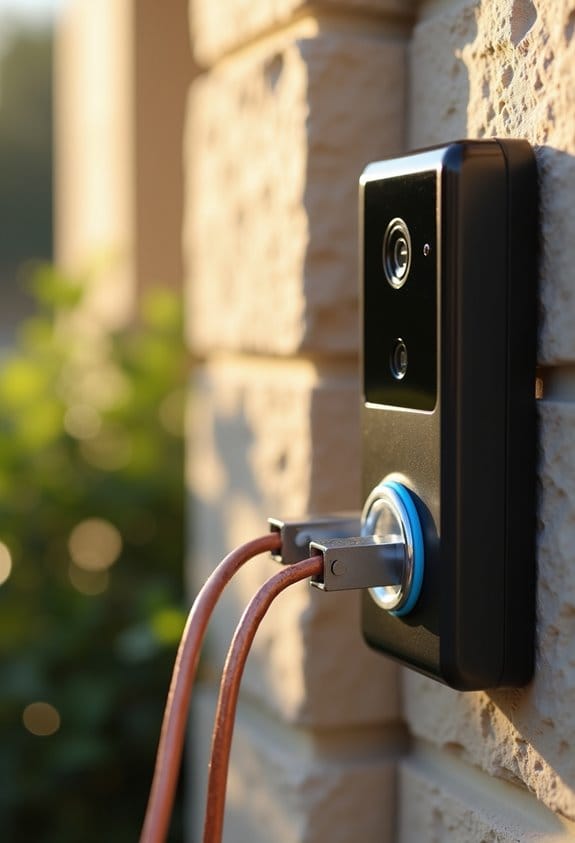
When we decide to upgrade our doorbell, we often encounter the reality that the existing wires might be too short for the new installation. Extending our doorbell wires is vital for proper functionality. If the wire length is insufficient, we can’t easily attach wire nuts, which are necessary for secure connections. To extend the wires, we should use a compatible gauge, typically within the range of 16-24V AC, ensuring that our new doorbell works effectively. It’s important to choose weather-resistant connectors for outdoor applications to prevent future corrosion. After we extend the wires, we must test the doorbell to verify that it functions correctly and safely, ensuring our installation is reliable for continued use. Proper wiring also helps maintain signal integrity and prevents interference with features like motion detection and video quality.
Assessing Your Broken Doorbell Wire Situation
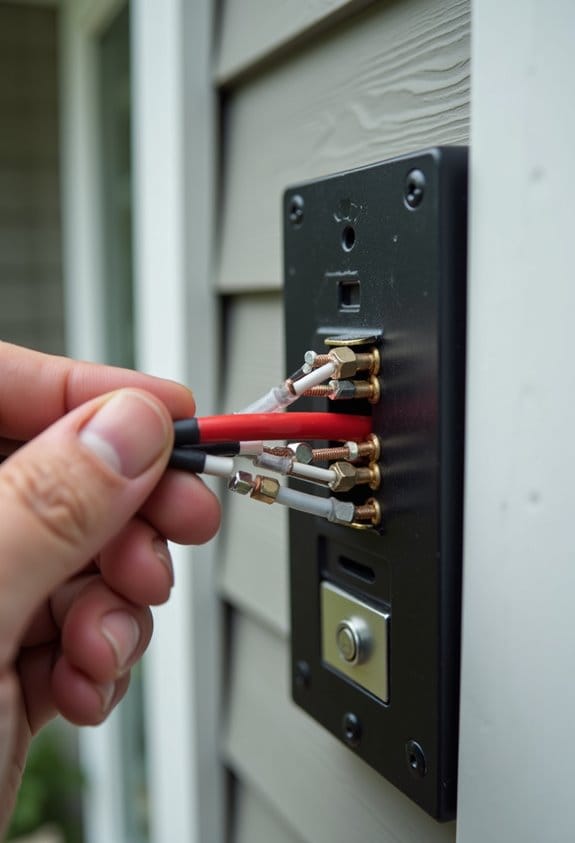
Evaluating the condition of our broken doorbell wire is a pivotal part of ensuring a successful installation of our new doorbell system. First, we need to check the wire length; if it’s too short to connect securely, we’ll have trouble. A voltage reading of approximately 58 volts tells us power is adequate, but we must know where the break is. If it’s near the doorbell or hidden within the house, our approach changes. Since there’s no junction box, we need to think carefully about how to extend the wire. Additionally, the wire’s location outside, surrounded by a wooden frame, may complicate this process. Identifying these details now will save us headaches later. It is also essential to ensure that the voltage compatibility of the existing wiring and transformer matches the requirements of the doorbell system to avoid underperformance or damage.
What Tools and Connectors Do You Need to Extend Wires?
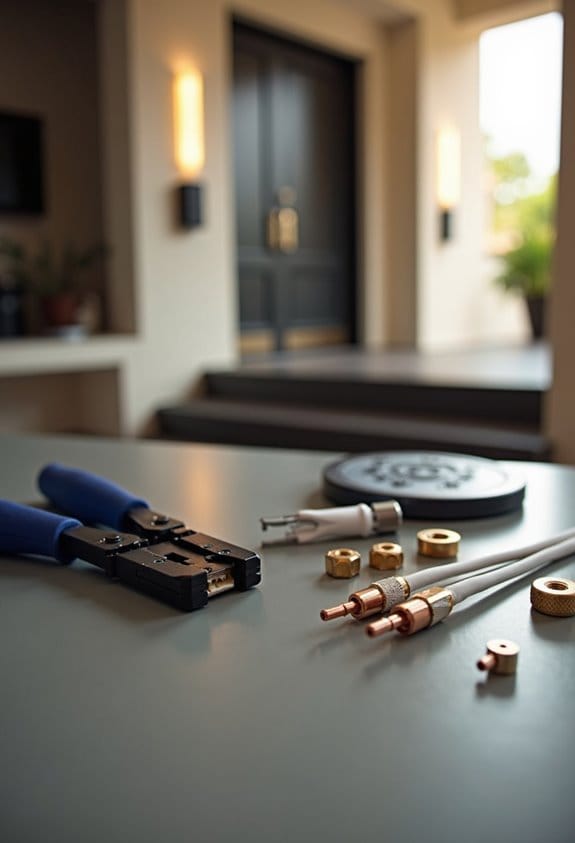
To successfully extend our doorbell wires, we need a few essential tools and connectors. First, wire strippers are necessary to prepare the ends of both the original and extension wires. We recommend using small gray or blue wire nuts, as they securely join 16-24 AWG wires, guaranteeing reliable electrical contact. For outdoor connections, UY-K2 connectors can be a good alternative, as they don’t require stripping and offer a waterproof option. If we need compact connections, WAGO lever connectors might be suitable, but keep in mind they require stripping. Finally, having electrical tape on hand will help provide additional insulation and strain relief after making our connections. This guarantees our work is both safe and durable. When extending wires over longer distances, considering the correct cable gauge is important to prevent voltage drops and ensure reliable doorbell operation.
Step-by-Step Wire Extension Guide
Extending doorbell wires might seem challenging at first, but with the right steps, we can make the process straightforward. First, let’s assess the existing wire length and figure out how much additional wire we need. We should use wire that matches the original gauge and strip about ½ inch of insulation from both ends. Next, we’ll employ wire nuts or crimp connectors to securely join the original wire with the extension. For outdoor connections, we need weather-resistant connectors and should wrap them with electrical tape for extra protection. Finally, we’ll test the doorbell with a multimeter to verify everything works correctly before finishing the installation. This method helps avoid future issues and guarantees a reliable connection. Additionally, ensuring the wire extension is compatible with the voltage and power ratings of your doorbell system is crucial for safe and efficient operation.
Important Safety Precautions for Wire Extension
When working on extending doorbell wires, we must prioritize safety to prevent accidents. First, we should always turn off power to the doorbell circuit to avoid electrical shocks. Using insulated gloves adds another layer of protection against accidental contact with live wires. Before starting, let’s double-check voltage levels with a multimeter to confirm the circuit is de-energized. When making connections, we must verify they’re secure. This is vital; we should use connections with electrical tape to prevent short circuits and protect against moisture, which can lead to further issues. Finally, let’s remember to follow the manufacturer’s instructions for any connectors used, as this guarantees safe and reliable connections during the extension process. Additionally, using a transformer with auto-resetting PTC fuses can help prevent overheating or short circuits during wire extensions.
Testing Your Doorbell Functionality: What to Look For?
After ensuring safety precautions are in place and completing the wire extension, it’s important to check that the doorbell functions correctly. When testing your doorbell functionality: what to look for? First, use a multimeter to check the voltage at the doorbell; it should be between 16-24 volts AC. Next, press the doorbell button and listen for a chime sound, which confirms a successful connection. We should also inspect all wire connections for damage or loose fittings, as these can cause malfunctions. Testing from different distances is essential to verify the operational range hasn’t changed. If it doesn’t work after these steps, we need to reassess the connections or consult a professional for further assistance. Additionally, using an electrical tester can help confirm the presence of power before troubleshooting further.
Top 5 Mistakes to Avoid in Wire Extension
Five common mistakes can sabotage our efforts in extending doorbell wires, leading to functional problems or safety hazards. First, we should never twist wires together directly without connectors; this can compromise contact quality. Additionally, we must use the appropriate wire gauge, ideally 20-22 AWG, to guarantee reliable connections. Thirdly, when extending outdoor wires, skipping weather-resistant connectors exposes us to moisture, which can cause corrosion. Fourth, we shouldn’t forget to insulate connections with electrical tape for strain relief and to prevent accidents. Finally, we need to avoid testing the doorbell’s functionality before securing all connections and insulating them properly. Taking these steps will help prevent frustration and guarantee a successful wire extension project. Also, ensuring the use of UL certified components during installation greatly enhances safety and reliability.
What to Do if Wiring Issues Persist?
If wiring issues persist despite our best efforts to extend doorbell wires, a systematic approach is crucial for troubleshooting. First, let’s inspect the surrounding wiring for damage or wear, as this could affect functionality. If we measure the voltage and find it at 58 volts, that’s acceptable for a doorbell. However, if it still doesn’t work, we might need to install a new transformer. For inaccessible breaks, consider using a remote doorbell to avoid invasive repairs. If electrical problems continue after these steps, seeking professional assistance is advisable. Remember, we should always turn off power to the doorbell circuit before conducting any troubleshooting to eliminate electrical hazards. This guarantees our safety as we address potential issues effectively. Additionally, selecting a transformer with the correct voltage and current rating ensures stable power and prevents future wiring complications.
Frequently Asked Questions
How to Extend Short Doorbell Wire?
To extend short doorbell wire, we can join additional wire using wire connectors. Let’s strip both ends of the wires, secure them well, and wrap the connections for safety. Don’t forget to test it after!
How to Extend Electrical Wires That Are Too Short?
To extend electrical wires that are too short, we’ll use similar gauge wires, strip the insulation, make secure wire connections, and insulate them properly. Let’s guarantee safety and test functionality once we’re done.
Can Doorbell Wire Be Spliced?
Yes, we can splice doorbell wire! For proper wire maintenance, we should securely connect the original and extension wires using connectors, ensuring good contact and protecting them from the elements with weather-resistant options.
How to Attach Wire Extenders for Ring Doorbell?
To attach wire extenders for our Ring doorbell, we’ll connect compatible low-voltage wire using secure connectors, ensuring solid wire connectivity. We’ll strip the ends, twist them together, then wrap with tape—keeping everything safe and functional.