
When integrating a smart doorbell, we notice important changes in chime systems. Mechanical chimes produce a traditional sound but limit options. They must have proper wiring and meet a voltage of 8-24 VAC to work with smart devices. Digital chimes, however, offer customizable tones via apps and can connect directly to Wi-Fi networks. This opens more features, like adjustable volume and advanced notifications. Understanding these differences helps us choose the best setup for our home. More insight awaits ahead.
Key Takeaways
- Smart doorbells enhance compatibility with digital chimes, allowing for sound customization and various preset tones.
- Mechanical chimes can be integrated with smart doorbells, but they have limited sound options due to physical mechanisms.
- Digital chimes connect easily with smart home systems, enabling notifications via mobile apps and voice assistants like Alexa or Google Home.
- Proper installation and wiring are essential for both chime types to ensure functionality with smart doorbells.
- Digital chimes typically require a Wi-Fi connection for optimal performance, while mechanical chimes rely on traditional wired setups.
Understanding Mechanical Chimes: Features and Functionality
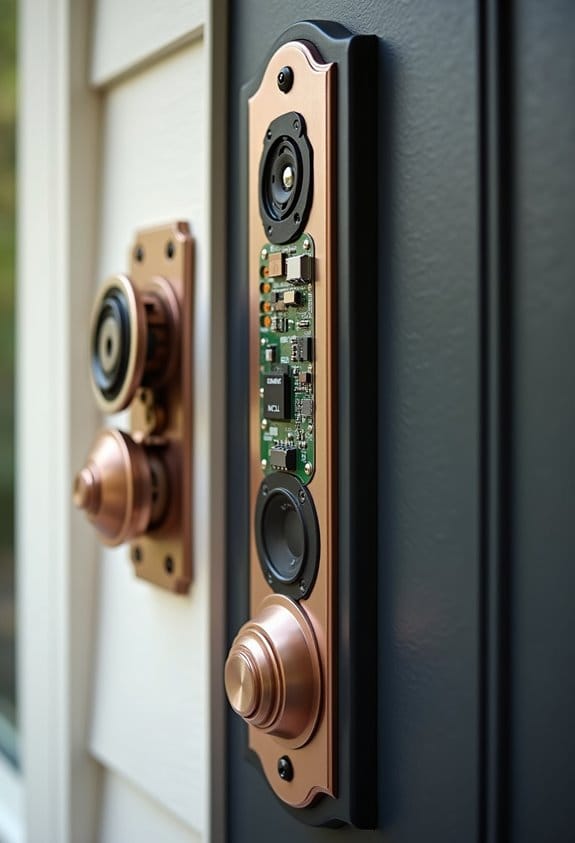
When we consider mechanical chimes, it’s important to understand their unique features and functionality. A mechanical chime operates using a physical striking mechanism, where a metal bar hits metal plates to create the traditional Ding-Dong sound. These chimes are built for durability, making them a reliable choice for older wired doorbell systems. The sound produced is rich and resonant, stemming from this physical interaction. To identify a mechanical chime, listen for its distinct sound and inspect the internal components, like metal bars and plates, ensuring it’s compatible with your existing wiring. While mechanical chimes may have fewer sound options compared to digital alternatives, they provide a classic aesthetic, adding a timeless touch to any home entrance. However, modern smart doorbells offer features like customizable notification settings that enhance overall doorbell functionality beyond traditional chimes.
Benefits of Digital Chimes: Features and Advantages
Digital chimes offer substantial advantages over their mechanical counterparts, making them an increasingly popular choice among homeowners. First, digital chimes provide a variety of preset sounds, allowing for greater personalization compared to the traditional Ding-Dong sound of mechanical chimes. These doorbell chimes utilize a digital speaker that produces high-quality audio, which considerably enhances the auditory experience. Additionally, many digital chimes come with adjustable volume settings, enabling us to tailor the sound level based on our environment. They can also connect to smart home systems, facilitating integration with smartphones and voice assistants. Finally, digital chimes generally have fewer moving parts and a longer lifespan than mechanical chimes, resulting in reduced wear and tear over time. Many models also offer customizable alert tones and volumes, further enhancing user convenience and personalization.
Comparing Mechanical and Digital Chimes: Key Differences

Mechanical and digital chimes differ markedly in their design and functionality. Mechanical chimes generate sound through internal moving parts, often producing a classic Ding-Dong tone when a metal bar strikes plates. In contrast, digital chimes use speakers and electronic components, allowing for a wider range of customizable sounds. While mechanical chimes suit older wired systems and maintain a vintage look, they require more maintenance due to their mechanical parts. Digital chimes, on the other hand, easily integrate with smart doorbells, offering multiple chime options and mobile app connectivity for alerts. This makes digital chimes favorable for modern setups, enhancing the user experience with programmability, while mechanical chimes remain simpler but limited in sound choices. Many digital chimes also offer customizable melodies which can be selected to suit personal preferences and home decor.
Integrating Smart Doorbells With Mechanical and Digital Chime Systems
Integrating smart doorbells with chime systems can enhance our home’s alert capabilities, provided we guarantee compatibility. First, we need to check if our current doorbell chime is mechanical or digital and wired or wireless. For mechanical or digital chimes to work, they must meet power requirements of 8-24 VAC and a maximum of 40VA. Digital chimes offer more versatility, allowing us to customize sounds via companion apps. However, mechanical chimes use physical mechanisms, limiting our sound choice. Some smart doorbell systems even let us set up multiple indoor chimes, allowing alerts from the smart doorbell to ring through both types of chimes. By ensuring compatibility, we can effectively enhance our alert system. Additionally, many smart doorbells support integration with smart assistants, adding voice control functionality to the chime setup.
Installing Smart Doorbells: A Guide for Mechanical Chimes
Installing a smart doorbell to work with a mechanical chime can considerably upgrade our home’s entry system. First, we need to verify the existing mechanical chime operates on 8-24 VAC and a maximum of 40VA. Once confirmed, let’s switch off the circuit breaker to avoid any electric shock during installation. Next, detach the current mechanical doorbell button and connect the new smart doorbell’s wires to the same terminals for seamless functionality. After completing the wiring, restore power and test both the doorbell and the mechanical chime to confirm they operate together. Finally, don’t forget to check the smart doorbell app settings for proper connectivity to the hardwired mechanical chime system. Choosing an appropriate mount option can further enhance the setup by ensuring optimal placement and security of your smart doorbell. This careful process will guarantee a smooth installation.
Installing Smart Doorbells: A Guide for Digital Chimes
As we consider upgrading to a smart doorbell, it’s essential to confirm that our existing digital chime system can support it. Check that our system operates within 8-24 VAC and doesn’t exceed 40VA. For installation, we first verify the power supply, and then carefully detach the old doorbell button. Next, we’ll connect the smart doorbell to the appropriate terminals as outlined in the installation guide. Many smart doorbells also require a Wi-Fi connection for peak functionality, including real-time notifications and video streaming. We should consult the specific installation guide of our smart doorbell to verify it meets any unique wiring requirements. Following these steps will help us seamlessly integrate our new device with our digital chimes. Additionally, ensuring compatibility with dual-band Wi-Fi can significantly enhance connectivity and overall device performance.
Customizing Smart Doorbell Notifications
How can we guarantee our smart doorbell notifications are tailored to our preferences? Customizing smart doorbell notifications is essential. First, we can use the Alexa app for integration with our smart home systems. This allows us to set personalized alert tones for our video doorbells. We can choose different sounds for events like visitor arrivals or motion detection. It’s easy to adjust volume levels, ensuring we won’t miss important alerts. Additionally, we can even name notifications based on family members to quickly identify who’s at the door. Smartphone notifications provide real-time updates, ensuring we stay connected. By fine-tuning these settings, our smart doorbell becomes truly personalized, enhancing our home security and convenience. Many models also include multiple volume settings to customize sound intensity based on the environment.
Fixing Compatibility Issues With Your Smart Doorbell
Many homeowners find themselves facing compatibility issues when integrating a smart doorbell with their existing chime systems. These issues often stem from older mechanical or digital chimes not meeting required voltage specifications of 8-24 VAC and a maximum of 40VA. To guarantee proper operation, we should verify the age and type of our chime systems before installation. Sometimes, specific adapters like a USB dongle are necessary for connection. It’s essential to check the power supply configuration; improper wiring can lead to alerts indicating unsupported power levels. For seamless integration, we must pair our smart doorbell with compatible indoor chimes and configure necessary app settings to make sure our chime operates as intended. Choosing a doorbell transformer with UL certification can significantly enhance safety and compatibility during setup.
Why Upgrade to a Smart Doorbell With Chime Systems?
Upgrading to a smart doorbell can greatly enhance our home security and notification capabilities. Smart doorbells integrate with digital chimes, giving us customizable ringtones and volume control that mechanical chimes simply can’t provide. With digital chimes, we can select from varied preset tones, making alerts more personalized. Unlike traditional chimes, smart doorbells send remote notifications through mobile apps, letting us receive alerts from anywhere, which is essential for modern security. Many smart doorbells function as standalone devices, eliminating the need for complicated hardwired chime setups. Additionally, they can pair seamlessly with smart home systems like Alexa or Google Home, allowing us to receive voice command notifications. These features together considerably improve our home security and convenience. Furthermore, many smart doorbells offer local storage via microSD cards, enabling privacy-conscious users to save footage without relying on cloud subscriptions.
Conclusion: Choosing the Right Chime for Your Smart Home
When selecting a chime for our smart home, it’s important to understand the differences between mechanical and digital chimes. Mechanical chimes produce a traditional sound and often require specific wiring, usually 8-24 VAC. In contrast, digital chimes offer customizable tones that work well with modern doorbell systems, supporting wireless setups and integration with smart devices like Amazon Alexa. This allows for voice notifications, which can enhance our experience. Digital chimes also feature adjustable volume and a variety of sounds, offering more versatility than the limited options of mechanical chimes. Ultimately, we should assess our current doorbell system and power requirements to guarantee compatibility and peak performance before making a choice that suits our smart home needs. Considering the compatibility with existing systems is crucial to ensure seamless operation and easy installation.
Frequently Asked Questions
What Is the Difference Between Mechanical and Electronic Doorbell Chimes?
Isn’t it fascinating how chime types can vary so much? Mechanical designs offer classic tones, while electronic sounds provide versatility and range. We love the variety that each brings to our doorbell experience.
What Are the Disadvantages of a Smart Doorbell?
Smart doorbells can pose privacy concerns, face installation challenges, and may have limited battery life. While they offer advanced features, these drawbacks remind us to contemplate functionality versus potential risks in our smart home choices.
Do Smart Doorbells Need a Chime?
No, smart doorbells don’t need a traditional chime. During smart doorbell installation, we can opt for wireless chime compatibility or integrate with our smart home for alerts—keeping us updated wherever we are.
Will Ring Doorbell Work With Digital Chime?
When we upgraded our doorbell, the digital chime sang a sweet melody. Yes, a Ring Doorbell works with digital chimes, but we must watch for compatibility issues, installation requirements, and sound quality to guarantee it sings beautifully.